
12:00



Hello, it's Adam in the newscast studio and it is Chris at Westminster. Later on, we're going to catch up with Lee Ducet because she has managed to get into Iran. She's been there for a couple of days uh and she's been speaking to me from Tehran, the capital. Uh so, we'll get an interesting insight into what life is like actually in that country that we've talked about so much over the last couple of weeks. But first of all, we're going to get the latest from Chris at Westminster uh and the Mandlesson appointment saga or the subplot of the saga which was about his vetting being uh refused by the vetting agency. But Sir Ollie Robbins, the then chief civil servant at the foreign office overruling
that as he was entitled to do to give him security clearance anyway. And today was a sort of big milestone moment in that story that's been rumbling since Thursday, which was Kier Star in the House of Commons facing MPs over all of this. Uh, Chris, what sort of parliamentary moment did this feel like? It felt like a big moment and I tell you what really stood out for me, Adam, was how quiet it was. You kind of associate big parliamentary moments where there's a bit of jeopardy in the air with noise. Uh, I mean, PMQs every week is an example of that, but also your more sort of big set piece occasions, whether it's budgets or indeed moments where things might be difficult for someone. I was really struck. the prime minister's opening
statement lasted about 15 20 minutes which is long for these things and for the best part of I don't know 70 80% of it the house just listened in silence and I think that was the reason that stood out is that usually in these situations MPs on the prime minister's side or on the side whoever of whoever is giving the statement will be more audibly supportive but the thing is from the perspective of Labour MPs and there were some who were supportive in their questions afterwards others of whom were were critics. Whatever your view as a Labour MP of all of this, it's just sort of unaloyed bad news that it's making news again. It's just, you know, it's just from their perspective um not great. There was a bit of mirth towards the end of the
prime minister's statement when he said for those who think all of this is incredible in the kind of literal sense of the word as in not as in Whoa. Yes. Exactly. As is as in not credible. Um he basically said I agree. uh in terms of the sense from his perspective that he feels that he was spectacularly let down by the foreign office in general but in particular uh Sari Robbins the now former lead civil servant in that department given the elbow by the prime minister and the foreign secretary um last week and then I think from Karma's perspective overall you know if the best you can hope for is that you think you can assemble the evidence that proves that you
didn't lie but you have to admit to ignorance repeated ignorance over and over again in his view because he was let down spectacularly by the system. That is, you know, back against the wall territory for a couple of hours, best part of two and a half hours in the chamber. And that's pretty uncomfortable if you're Kia if you're uh Kia Starmer, you know, did it go better or worse than he might have imagined? Difficult to tell. I mean, it wasn't spectacularly worse, I don't think, than he might have feared. Uh but at the same time, he'd be going in there with his expectations set well into the negative as far as today is concerned.
And in that sense, that's precisely kind of what it was. Interesting that word incredible because I wondered if he meant it in the meaning of amazing. Whoa. Or incredible as in difficult to believe because the people laughing in the House of Commons took the latter view. Yes. Or maybe he meant it to mean both things. I know many members across the House will find these facts to be incredible. Yeah, perhaps he did mean it to be both things. I think he was seeking to, as people will often do when they're making an argument. He's he was seeking to adopt the instinct of his biggest critic in terms of the particular set of facts
as he sees them that he was laying down. Um, and the different interpretations of that word probably explained why there was that kind of audible mirth. Um, but I think he was seeking to acknowledge that he found this as astonishing to pick an alternative word if you like as his critics did. Right. Let's have a listen to some of that statement from Kirstma and then newscasters can make up their own mind. I accept that the sensitive personal information provided by an individual being vetted must be protected from disclosure. If that were not the case, the integrity of the whole process would be compromised.
What I do not accept is that the appointing minister cannot be told of the recommendation by UKSV. Indeed, given the seriousness of these issues and the significance of the appointment, I simply do not accept that foreign office could not have informed me of UKSB's recommendations whilst also maintaining the necessary confidentiality that vetting requires. So Chris, that was the prime minister basically heaping the blame on foreign office. I noticed he used plural, not just foreign office official singular meaning Ollie Robbins. And he then listed all the times he feels those unnamed foreign office officials could have told people in Downing Street or the foreign secretary whoever it was at the time and I counted out five times.
So he said they could have told him that Mandlesson had failed his vetting when he was actually appointed. So during that process from announcing he got the job to him actually getting the job. Um they say Starmark said he could have been told when Madison was fired. Then we got a slightly new one I don't think we'd heard before which was the then cabinet secretary so sort of chief civil servant in the country doing a review of the whole Manderson hiring firing who has since been fired by the prime minister. Yes. Little um little wrigle in that story. Um wrinkle I should say. Um yes. So that was new. And then also the fact that when the foreign secretary Iette Cooper signed a statement to the
foreign affairs select committee which was co-signed with Oliver Robbins Ollie Robbins there was another opportunity for them to say it there and then when he did a whole review of how vetting works in the light of all of this he said that he also could have been told then so that's five times he says foreign office officials could have told him but they didn't. Yeah. And there was one uh element of it which seemed particularly farical which was when you had Sir Chris Wormold the then cabinet secretary asked to take a look at all of this that even at the point that there is a review to find out
what might have gone on in the whole vetting process it didn't turn up the biggest fact that was not widely known at the time. So a review of the system by the system into the system failed to un unear from the system the key fact that is now central to this story which is mindboggling to be honest. But then if you look back at the foreign office statements about this they're very carefully worded to say that the vetting process was conducted and then security clearance was granted. We now learn that those are two separate things because the security clearance could be granted even if the vetting process had effectively said this person shouldn't be granted it.
Yes, they were misleading by a mission rather than by what they said. But I was talking to um Emily Thornbury. In fact, we played the exchange, didn't we, on newscast at the back end of last week. She's the Labour MP who chairs the foreign affairs select committee and she was showing me that letter that her committee had received from Ollie Robbins and Iette Cooper the foreign secretary and the key thing in that letter was not so much that the foreign office failed to spell out that um that there'd been a failure in for Lord Mandlesson in part of the vetting. It was that they managed to do that having been asked explicitly about whether there are any concerns uh in the vetting
process and in their answers by admission they implied that there weren't when it turns out they were and crucially that letter was signed by Ollie Robbins and Iette Cooper. Now, I vet Cooper makes it clear that she didn't know and therefore she's furious because she put her name to something that turned out to be in by emission wrong and gave a very misleading impression to the Foreign Affairs Select Committee. Ollie Robbins name was on that letter and we know that he did know. Now, we know as well, and we'll hear this spelt out by him, no doubt, on Tuesday morning, 9:00 Tuesday morning when he appears before Emily Thornburrew's committee, that he believes he was acting correctly in interpreting the law from back in 2010 that says that the whole business of
vetting is a responsibility that lies with civil servants and they shouldn't be uh sort of spilling the contents of these things to ministers and to the prime minister. where the prime minister argues there is a distinction is between the contents of that vetting in other words the kind of if you like the gory details or not gory details whatever those details are that perhaps shouldn't be shared so the argument goes because they're really personal and you can't have a system like that if people think this stuff is going to be sprayed around and the conclusion the recommendation uh because the argument from the prime minister is firstly the law allows that to happen and secondly
kind of what's the point of the process if those in power politically can't act on the conclusions because they don't know them. Although the prime minister sort of actually strengthened one of the arguments made by Ollie Robbins's uh acquaintances that about the law not allowing him to share the information with the prime minister because it looks like the cabinet office officials who got the information eventually from the foreign office about the vetting had to get their own legal advice before they could tell the prime minister what they turned up. which suggests that in Whiteall there was a real sort of oma around this vetting stuff which and that is the argument that Ollie Robbins's mates have made this weekend.
Yeah. And I think what's really interesting about how this has been interpreted is that when the Guardian published its follow-up story on late Friday afternoon, I think which was after you and I had recorded the Friday episode of Newscast. They revealed that two other senior civil servants had also been aware well before the prime minister. In other words, uh last month, the cabinet secretary and the permanent secretary at the cabinet office. So, Antonio Romeo um and Cat Little respectively, but they were at pains to ring up any journalist who would pick up the phone on Friday night because I took a call and when then when I rang a colleague to pass this on, it turns out they'd had a call already,
they were at pains to point out that in their view, in Downing Street's view, um the way that um Romeo and Little had approached this was exactly how it should be approached. In other words, they hadn't sat on it. They had gone through what they regarded in the political circles at the top of government as reasonable procedure. And okay, that took a while, but it was reasonable procedure with a view to telling their if you like political masters as opposed to just not telling anyone for a extended time. But then how come it was reasonable for them to do that, but it wasn't reasonable for Ollie Robbins to have done that months before?
I mean, I think that's a I guess we'll find out. I mean, I think the argument that Downing Street would make to troll that distinction because by the way, when the Guardian published the story and when others wrote it up, there was a there was an interpretation given to the along the lines of, "Cool, blime me, there was even more folk in the civil service who knew and didn't say anything." Now I think to an extent you know if you're in Downing Street you probably wanted to minimize the extent to which you were beginning a civil war with the entire civil service as opposed to with one senior figure because you would understand if you were in the civil service that you might be um you
know looking upon uh your current government who you are there to serve with a you know a tad of a raised eyebrow in the light of what's happened in the last couple of uh days. I think from Downing Street's perspective, their argument over the distinction is that as soon as these two other civil servants uh found out about this stuff, they started a process that relatively quickly led to the prime minister finding out, albeit that was part of a process that was likely to flush this out into the public domain anyway. Although there was a bit of an argument about whether that was going to happen or not, which may or may not have contributed to the Guardian's initial um initial story. Whereas in the
case of Ollie Robbins, there were these as you were trottting through the these repeated moments as the prime minister sees it where surely in his view the system should have churned this information out in his direction and repeatedly it never did. And I should just say Omar is the Sicilian mafia code of silence. Did I use that word? No, I did. Right. Yes. Is that where it comes from? Right. Actually, right. Some people in this office were speculating it was Latin and therefore it was kind of like James Landdale territory. But no, it's just basic Italian. You used to watch The Godfather. Um I knew what it meant. I just didn't really know.
No, I'm not doing it for your benefit. I was doing it for anyone else. I'm always up for these explanations. I thought I'd said it with I thought I'd just sort of blurted it out like a actually I'm not going to say like anything, but just said it. So anyway, where we've got to then with this story, and let me as I think on my feet, think uh we've got a little bit more No, I meant metaphorically. Um uh we've got a little bit more information about the timeline and what happened when. We've got some sort of extra accusations from the prime minister towards the foreign office about when they could have told him this information. Yeah. uh
he did not get like fullthroated enthusiastic backing from Labour MPs as he was grilled by MPs from all parties in the House of Commons today. Uh but I'm not sure what else we've got other than that. No, I think that's kind of where we are. And then this is Halime really. This is sort of um if you're the prime minister sort of, you know, oranges and a pep talk. He probably doesn't want any football analogies after Arsenal lost at the weekend. But um this is Halime because we await Tuesday morning 9:00
Sally Robbins in front of the select committee. I think we have a reasonable sense of the thrust of what his argument is going to be. But I think his tone and his tenor as well as his testimony will be key. You know, to what extent does he well bluntly gun for the prime minister? Here's a guy who is clearly agrieved, who is clearly wounded, who's found in short order his uh career in the civil service kind of blown up uh over what he believes as we understand it to be behaving appropriately uh within the law as he interprets it and obviously Downing Street have a different interpretation of that law. So yeah, how does he approach it and where does that leave uh the prime minister? And I think as we record, Adam, I'm just trying to see if
I've been sent the information on this. I think the Conservatives are going to seek just been confirmed here. There will be a three-hour debate tomorrow, Tuesday. Yes. So off the back of Ollie Robbins and the questions he will face relatively early on, 9:00 tomorrow morning, for however long, I'm not sure how they go on an hour or two, I'd have thought. Um it looks like we'll be back in the House of Commons sort of unpicking this uh unpicking this further. So on it rumbles and then of course there's PMQs on Wednesday. And of course this is all happening because of a previous conservative debate which culminated in that humble address which was a technique they used
to get all the Mandlesson documents out in the open which is why this story even exists. Yeah. And actually part of that process. Yeah. and speaking to conservatives privately who you know obviously we focus a lot on the government at the moment because the govern the government is the government and they do the governing but the conservatives you know are in a pretty difficult place at the moment politically a vanishingly small number of MPs by their standards historically weak place in the uh opinion polls all of those defections and yet actually moodwise they're pretty chipper they face a set of elections next month that
also like Labor look pretty bleak for them but they do take a pride in as they see it delivering their duty as his majesty's opposition um effectively in recent months and I think you know as you nodded to there are plenty of strands of evidence they can assemble in making that argument. They've made the running on a lot of this stuff which has changed things. It's it's it's put the government in a really difficult spot. And at some point in the coming weeks, um there's going to be this next drop of this next deluge of documents relating to the whole Mandlesson business and we'll, you know, go around this block all over again.
Chris, thank you very much and I look forward to catching up with you for more analysis on your birthday. Thank you. Now, as promised, we're going to catch up with BBC chief international correspondent Lee Ducet, who has been traveling through Iran and reporting from there for the last couple of days, but this is the first chance we've had to catch up with her properly on newscast. So, we've heard little slivers of what she's had to say on various episodes in the last couple of days. Um, in terms of what is happening in the conflict, there is shrouded in mystery potential negotiations in Pakistan.
Again, uh, we just don't know what's going on there. Lots of conflicting reports. And then in terms of the Street of Hormuz, the US naval blockade has sort of stepped up a gear because on Sunday the US boarded and seized an Iranian tanker that was trying to get through the American blockade and Iran has reacted quite strongly against that which has complicated the whole diplomatic picture. So plenty to discuss with Lisa Set who I caught up with earlier on today. And before you hear our conversation, I should just remind you that one of the conditions for her being allowed to report from Iran put on her by the Iranian government is that none of her material is broadcast on the
BBC's Persian service. And that is a restriction that applies to all international media organizations operating in that country. Lee, hello. Good to talk to you, Adam. Not beside you, a long way away, but at least uh talking to each other still. And so, where are you at the moment? I'm on a balcony in Thrron. We're sort of in the center north part of the city. It's a gray cold day, so we've had to retreat inside. So, I don't get my I and my team don't get wet speaking uh with you. And it was quite a long journey to get there. I mean, you arrived in Tehran a few days ago. This is just the first
chance we've had to catch up with you, but actually getting there was quite an adventure in itself. Yes, a marathon. The airports uh two of the main airports here in uh the capital Tan have just been open for passenger flights. But when we came last week, uh the airspace was still closed. So the only way to get in was to cross from a neighboring country. So it came from Turkey. Uh it took us about 12 hours to reach uh the capital which of course was good to maybe not that long but at least along the way we could see a little bit of the landscape of war to see uh some of the bridges which had been destroyed some of those which had been uh still standing. And I have to say Adam I kept staring at the bridges
because President Trump keeps make those threats to destroy every last bridge in Iran. So I wanted to see which ones were still standing. Um and we did also see around the main northern city of Tabris uh some of the bases and barracks of the Islamic Revolutionary Guard Corps which had been flattened uh in those weeks of Israeli and American uh air strikes. So and the beginning of life uh returning uh but with every day here we see life returning uh just bit by bit. M and can you see much war damage? Because we're told that actually a lot of the US and Israeli strikes were very targeted on military targets or IRGC targets and so kind of local neighborhoods weren't really affected. What's your take from having now seen it with your
own eyes? No, the when remember Adam, we used to have these conversations in London and I and our colleagues would talk about how uh the missiles were slamming into crowded residential areas and that meant that uh civilian homes and people uh were getting hit, people were being killed. And I went to one of those leafy neighborhoods. Tan, I have to say, is a very beautiful uh city. Lots of trees, uh lots of gardens. Iranians have this great sense of style. Of course, this is I'm in the sort of center north, which is the relatively more affluent parts of the city, but we went to like a narrow street in one of the leafy residential
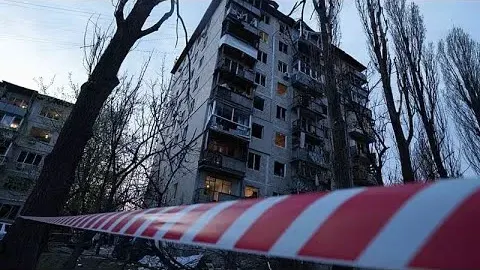
neighborhoods. And right in the middle uh of the street, there was a huge gaping hole. All was left was mounds of rubble. And it was interesting. It was it almost became a sight. People were walking to see it, even though it was many days since it had actually been hit, coming to have a look. And when you looked at the other side of the streets, the facades of all the uh homes and uh buildings had been blown off. And we happened to meet a man who was just going into his place, which was lying in ruin. And he sort of mockingly said, President Trump said he would send us help. He goes, "Is this the gift to the people of Iran?" there a lot of bitterness and anger as to why the
war uh meant this. We also visited the bridge that President Trump had boasted about when he said the biggest bridge in Iran has come tumbling down and it was a real engineering feat. the tallest, widest, longest bridge about a month before it was to be completed. And uh two Israeli two American air strikes a few hours apart, multiple missiles slammed into the bridge, slicing it into three. And it also provoked a lot of anger here that this wasn't a military target. They saw it as civilian infrastructure. And for many Iranians, it was an attack on their country's future. So in short, no, it wasn't just military targets that were hit. It wasn't just that uh senior leaders were assassinated. All that happened, too. But not just that.
And Lisa, you alluded to some of the conversations you've had with Iranian people. I just wonder what's the sort of range of opinions you're hearing and just how many people are coming to talk to you and do they feel that they're able to talk to you? It's always a mix. When we have a television camera, it's more difficult. people don't want to talk. They're nervous about speaking, especially about political topics. But if we're just chatting or if I say, well, it's just going to be for radio, uh people are very uh open with their with their views. And in fact, people again this friendliness of the Iranian people, their deep hospitality, they even despite the hardship of this times, they don't lose the people. In fact, the place that I mentioned
where we were visiting a site of an attack where there was one man who was really uh didn't want us to be there. He was trying to get us to leave. Another woman came out with trays of tea and sweets and come to my house and have have tea with me. And people do come up to us and we say, "Can we ask you questions?" And they do. And not surprisingly, I mean, you cover politics in Britain, Adam, here as well. Iran is no different. you get a whole range of views but and sometimes you're surprised. We went for example to a fruit and vegetable market where people talked to us about how the prices there high before the war even higher now. I was reading a report today that inflation now 60% in February when we were here 72%
uh now I mean how can any of us live in that kind of and yet when we spoke to the man who was behind the till and he said yes you know things have been difficult business is not so good uh prices are now higher and then I said well you must really want a deal to be done with the United States so that sanctions can be lifted he goes no I don't want a I don't want to deal because I think we should punish uh the US aggressors. And then you'll also hear from other people, no, I don't want to deal, but for completely different reasons. They don't want to deal because they want to remove this regime and they don't want something which will keep them in power. And speaking of which, in terms of the
news today, um do you have any idea if we're going to see some more negotiations in Pakistan? because it sounds like oh JD Vance the vice president is on his way to Pakistan but then it also sounds like he might not be and it sounds like the Iranians aren't going either. So it's very unclear what if anything might happen. Yes, there was these conflicting posts. President Trump told the New York Post that JD Vance and his other envoys were in a plane. They were going to land in Islamabad in a few hours and then we were trying to all figure out when the talks would start. And then there comes another report from White House officials saying no, they haven't actually left. Uh they may leave Tuesday. I mean, because it really makes you wonder why would they leave until
until they have uh firm confirmation that there's going to be someone to talk to that the Iranians are going to go. Now, the last indication we had from the Iranians and now it is just past quarter 7 in the evening here. I can see the lights in the city coming on, Adam, as we're speaking. Uh the foreign ministry spokesperson used this phrase, "So far, so far we have no plans to go to Islamabad and so far we haven't made a decision. Iran is in a really tight spot even before this incident in the straight of Hormuz." We may talk about that how the first time an Iranian vessel was uh stopped, fired upon, boarded and seized by the US Navy, Iran had already been indicating that because of the US naval blockade,
it wasn't ready to go to Islamabad uh for talks. Now, it has this what it's called an active piracy and it also has reservations about this process. doesn't feel that they're in the right place yet uh in order to have the kind of give and take to try to start closing the gaps in the negotiations, but they're under pressure from the Pakistanis. And if the US Vice President JD Vance and his team get on a plane, Iran doesn't want to be seen to be the ones blamed for the talks not happening. So, they're in an invidious position, it has to say. So, we'll have to wait and see. You may remember that the last time there were these historic uh high level uh face-to-face talks, Iranians also waited until the 11th hour, then it was that
they were demanding that the ceasefire should also include Lebanon. And they eventually got that. So, I think they're also holding out again, hoping that the US will lift that naval blockade if they do. That's quite a big concession from President Trump. It'll show that he really does want uh the talks to go ahead. M and it's so interesting talking to you about the straight of Hormuz at least where you are in Tehran because when you then look on the map it's a reminder of what a huge country Iran is because the straight of Hormuz is a really long way away from where you are let alone a long way away from where I am.
Yes, we in fact we had said to the media agency that we work with, well how about going to Bander Abas and you could feel the from the other end of the on the WhatsApp thing, well do you realize how long it will take us to drive to Bandurabas? We're right up in the north. We go all the way down uh to the south. Yes, this is a people forget I mean this is a country more than 90 million people. It's four times the size of Iraq and people had to bear that in mind when they talked about a US land invasion. Remember those days uh during the war so yeah it's a it is a long way away but the street of Hormuz is on a lot of people's minds including where you are in Britain. And just in terms of how you're allowed
to be there, because I know the Iranian government are not keen on Western journalists being there. So, how did how did you wangle your way in, if I could put it so crudely? I would I don't think I would put it that way, Adam. I don't think they are not keen on having Western journalists here. They are restricting the numbers. Um, and they've always decided who they want, which networks they want to get visas to, um, and which ones they don't. Um and they say to us and there is some evidence to support this that uh they have to be careful because it is a
sensitive situation and we find and not just us when other uh broadcasters particularly from the United States go into those really packed crowds of very defiant government supporters and they see western media and these are the crowds who shout death to America and death to Israel and they see the western media as hostile. it can sometimes get really difficult and it's such a contrast because as I mentioned most of the times there's such a warm welcome uh from Iranians so they obviously don't want any incidents and when you when we work when we go through the streets and we're filming or we sometimes attract attention and this is a place it has always been a place where there are security forces everywhere
some in uniform and some plain clothes and we can really feel that security has been tightened. There are more security forces on the streets. We get stopped more when we show that we have our permissions, we have an accreditation letter, uh then sometimes telephone calls have to be made, then we can uh get on with our work. So, it's not easy to work here, but it is definitely possible uh to work here. And for those who say, "What are you doing uh going to Iran? You shouldn't be there." Every time we are here, I think it affirms for us, for our team. I'm here with Charlotte Scar, the producer Nikki Milard, our camera person who's been to Iran many times over the years. Is that
it does good oldfashioned journalism being on the ground talking to people face to face, trying to get a sense of the mood of the place, trying to speak of course to officials as well. You come away with a much better sense of what is after all. Adam, we you and I in London kept talking about this story because it matters here to Iran. matters to the region and it matters all the way to London as well. Lee, my main takeaway apart from it's nice to catch up with you and you've painted such a vivid picture of what it's like to be in Iran, is just that anyone who thinks, oh, just a little bit more pressure and people will come flooding out onto the streets and
overthrow the regime that's been in charge for decades and decades. All it takes is just kind of one more push to help them. That's just not the case even remotely. Well, bear in mind that President Trump, who had started that war on February the 28 with that 8-minute video in which he said, "When we finish the bombing, people should come out and the government is yours to take." Hinting of course that his this military operation was about changing the regime. And now he said again in a social media post today that he had already achieved regime change because uh Israeli American strikes had assassinated top people in the security and political
echelons. They've just basically move the pieces around. The structure is still in place. It is not a question of individuals. This is a multi-layered system. Security, religious, political, honed and hardened over 47 years since the Islamic Republic. President Trump likes to talk about, oh, I found the right people to deal with. This is not the kind of system. It's not like Venezuela where you take out the president and suddenly you have a whole administration and a new president that can you can work with Iran is not like uh that. So it is and in fact Iranians who had been hoping for President Trump's help hoping that the beginning of the war would mean the beginning end of the regime. What they have instead is a regime which is
more hardline, more militarized and in some ways stronger uh than it was be before the war. I mean again there have been losses here and there's going to be an even deeper economic crisis. You can already see the signs of it with talks of job losses and decline in economic activity. People's discontent is going to deepen. But right now, because of that uh extra surveillance on the street, because Iranians have lived through that lethal crackdown in January, which caused thousands, possibly tens of thousands of lives. At some point, you know, every few years there is this surge of people into the streets. Some calling for economic change, some calling for
political change. And it will it will happen again. But uh right now Iran is just living in this fragile ceasefire and not a single person whether they're working for the government or supporting the government or against the government. No one here thinks that the ceasefire will hold. At least when are you coming back to base? Well, we just been told we can stay a few extra days here. So we might talk again across uh across the miles uh Adam uh from between Tehron and your studio um in London. But I look forward to joining you there. If not this week, maybe next week. I'm just so torn because Yeah. I mean, I'm so torn because it would be lovely to have you back here. But equally, it's so good that we've got you there on the
ground because the thing that was missing during the height of the bombing and the war was actually what it's like on the other side. So that's why that's why I'm trying to balance up there. Anyway, Lee, thank you very much. Good. Good luck, Adam. Good luck with the reporting of all the big stories in the UK, too. Thank you.

Read the full English subtitles of this video, line by line.