3:55


One thing that is true even in Newtonian ways of thinking about space and time or in Einsteinian ways of thinking about space and time is that these fundamental laws work forward and backward in time. Knowing everything about the universe at one moment predicts the past as well as the future. That's because what we think of as the fundamental laws of physics do not have a directionality to time. They treat the past and future the same. But there's clearly a direction to time in the world. I remember what I was doing yesterday. I might guess what I'm going
to do tomorrow, but I don't remember it in the same way. I have no photographs or memory books of the future. What is going on with that? And the answer is it's not the fundamental laws of physics. It's the collective behavior of many, many things in the universe that start out in a special state. I'm Sean Carroll. I am a physicist and philosopher at Johns Hopkins University, host of the Mindscape podcast, and also author of a bunch of books, most recently the biggest ideas in the universe series, including spacetime in motion and quant and fields.
What is the nature of time? Isaac Newton, you may have heard, was a smart fellow. And one of the interesting things when you invent a whole new way of doing physics, if you're right and it becomes successful, then later on people kind of take it for granted. They're like, "Yeah, this is how the world works or whatever." But at the time, you're still very careful. And Newton was himself super duper careful about all the assumptions that went into his theory and what their implications were and so on. One part of classical mechanics is the idea of space and time both separately existing and being
absolute. There is a meaningfulness to that. There is no preferred position in the universe. You can be anywhere you want. The laws of physics work the same. There's not even a preferred velocity to the universe. This was figured out by Galileo and Newton kind of took it on board. If you started everything moving at 1 mile per hour to the left, the world will look exactly the same. There's no actual frame of rest that you can measure. But there is space and there is time and everyone agrees on what those two things mean. When I say I am one mile away from a certain other point,
everyone in the universe agrees you are one mile away. Yes, that is correct. When I snap my fingers and say at the moment I snap my fingers a certain thing is happening in Los Angeles everyone agrees that indeed at that moment that's a well- definfined concept to say what is happening at some point far away not just Los Angeles but Alpha Centtory or the Andromeda galaxy. Turns out those assumptions are not quite right and it was a journey to get there as it often is. It started in the 1800s with the invention of electromagnetism. So there are all these new phenomena that people
were thinking about since Ben Franklin flew his kite and studied lightning coming down. It was James Clark Maxwell who put the whole story together after work by people like Faraday and Aier and so forth. And what he realized is there's two fields pervading the universe, an electric field and a magnetic field. and he wrote down some equations that these fields obey and they sort of play with each other and push around charged particles and things like that. People were very happy at the existence of electromagnetism. They started thinking about what it all meant and
what they realized is that the sort of way that space and time are treated in Maxwell's theory of electromagnetism is different than the way they are apparently treated in Newton's theory. In particular, Maxwell's equations predicted a special velocity. There's no special velocity in Newtonian mechanics. Every velocity is created the same. Maxwell says there is something called the speed of light. It is the speed at which waves in the electromagnetic fields move. And naively, you look at the equations and everyone measures the same value for the speed of light. It's a constant
of nature. How can it possibly be the case that everyone measures the same speed for light even if they're moving with respect to each other? So for a long time, for decades, people physicists bashed their heads against this problem. They came with very elaborate schemes to get rid of it. And it was Einstein, Albert Einstein in his great paper in 1905 who first said you should get rid of the idea of these waves traveling through a medium. You should think of the electromagnetic waves as really being the thing that exists. And when the equations tell you everyone measures the speed
of light the same, that's because they do. Take that seriously. All you have to do is entirely rejigger your thoughts about what space and time are. And in fact, it wasn't until two years later when Herman Mmanovsky, who was a mathematician who had been one of Einstein's professors, said, "You know, the right way to think about Einstein's theory is to say that space and time aren't separate anymore. To imagine there's one thing called spacetime, and different people, different observers moving in different ways through the universe will divide it up into space and time
differently. There's no objective true fact about when I snap my fingers now what's happening light years away. That's going to depend on who's doing the observing and who is doing the measuring. It can all be explained very beautifully by imagining a single four-dimensional spaceime instead of separate space and time. Einstein himself was not impressed by this move. Einstein was a hilarious character because he was a physicist's physicist. He was very mathematically adept. You know, don't believe the stories that Einstein wasn't good at math in school. He was very good at it, but
he wasn't in it for the math. He was in it for the physics. So, he learned as much math as he needed. And when Benovsky says, "I have some new math that unifies space and time based on Einstein's theories," Einstein himself is like, "I don't need that. That's like extra mathematical nonsense." He soon changed his mind because it turns out that move from space and time being separate to being combined is super useful going forward, including 10 years later, he would invent his general theory of relativity that include gravity into the space-time story. When Einstein put
together what we now call the special theory of relativity, the idea that there's no preferred standard of rest in the universe, but also everyone thinks the speed of light is the same. All you have to do is imagine ultimately that space and time are glued together. That was a radical reworking of the framework of physics. You know, Newton's idea of separate space and separate time absolute and agreed upon by everyone had been there for hundreds of years. And when you do that, when you say, okay, I'm going to completely invent space and time in part because I want
to match this wonderful theory. We have Maxwell's theory of electricity and magnetism. You have to go back to everything that was a success in your previous way of doing things and say does it still work? The biggest success of Newtonian classical mechanics was gravity. The famous inverse square law of gravity. Newton posited that if you have two objects with two different masses, they have a gravitational force that will pull them together that diminishes as one over the square of the distance between them. And that simple rule plus the framework of Newtonian
mechanics is enough to match exactly what you see in the sky in terms of the planets moving around. It's enough to launch a rocket and get it to the moon. So Einstein comes along and says, "Well, okay, can I make a version of Newton's theory of gravity that is compatible with my new theory of special relativity?" And after trying, he said, "No, I can't. You have to do something much more dramatic." And what he realized is that gravity is a special force of nature. You know, Maxwell talks about electricity and magnetism. If I want to know what the electric field is at one point in space,
it's very easy to do. I put a positively charged particle, a negatively charged particle, they get pushed in opposite directions by the electric field. But Einstein realized that every particle reacts the same way to gravity. If I have a very heavy particle and a very light particle and I drop them, Galileo showed that they drop at exactly the same rate. They're not pushed around in a different way. So because of that, gravity seems to disappear if you only look at it in a tiny region of the universe. If you were in a sealed box and you were dropping things and going,
"Oh, I have gravity here." You don't know that for sure. Maybe you're in a rocket ship and the rocket is accelerating and you're being tricked into thinking you have gravity. So Einstein, because he's Einstein, he's very smart. You know, you or I would go, "Huh, that's interesting." But he says, "I think what that means is that gravity is not a force on top of spacetime. It's a feature of spacetime itself." What feature could it be? Well, my ex-professor Minkovsky says that spacetime has a geometry. It's one combined thing, and there are equations telling me how particles move in it.
Maybe that geometry is curved. Maybe it's not like a flat tabletop like uklitian geometry. Maybe it's warped and bent and dynamical and changes in response to the existence of mass and energy and things like that. It's a good idea to have. It takes you a lot of effort and a lot of mathematical work to figure it out. So 10 years later in 1915, Einstein finally completes what we call the general theory of relativity. In the general theory of relativity says spaceacetime is a four-dimensional thing. That four-dimensional thing has a geometry. It's pushed around by matter
and energy. And we experience the curvature of spacetime as the force of gravity. When Einstein and Minkovsky figured out that space and time are both two different ways of slicing up spaceime, what does that mean? What does that mean like in our guts, right? What does it visually or measurably imply? You know, in space there's something called the distance between two points. If you say, you know, I'm here in Washington DC and a friend of mine is in Los Angeles, there's a distance between those two cities and we all agree on what that distance is because implicitly
we're imagining the shortest distance path, right? The straight line that connects these two points. But of course, if you actually travel between these two cities, you won't exactly necessarily take that much distance because you're going to go right and left. You're not going to go exactly on a straight line. So in space, we're all very used to the idea that different paths have different lengths, even if they start and end at the same point. In special relativity, now that space and time are unified, what that means is that time is like that. The time you personally
measure on your wristwatch is very analogous to the distance that you travel moving on some path. What that means is that rather than being a universal thing that everyone agrees on, time depends on the trajectory you take through the universe. The most famous example of this is the twin paradox. You imagine two twins. They don't have to be twins, but it's more vivid if they are because you think of twins as being the same age. Okay? One twin just doesn't move, just stays home. This is the lazy twin. And they get older like the rest of us all do. The other twin hops in a
rocket ship that moves out very close to the speed of light. You need to move close to the speed of light to feel the effects of relativity and then comes back. And so they left at the same time. They were the same age. They come back to the same point in space and the same point in time. But the twin who traveled is now younger. The twin who traveled has experienced less time than the twin who stayed home. And the reason why is because they took different paths through spaceime. Space and time are similar to each other but not exactly the same. That's why in space the shortest
distance path is a straight line. But in time the longest time path is the straight line. The twin who stays stationary and doesn't move, that's moving in a straight line through spacetime, that's the one that feels more time pass before the other twin comes back. When people hear this stuff about relativity and moving through space and things, what they want to say is, "Oh, so you're saying that time moves more slowly when you're traveling near the speed of light?" No, I do not want to say that. I very much do not want to say that. What is the rate at which time moves?
It is 1 second per second. You're being tricked by your use of the English language because you move through space and it makes perfect sense to say I am moving at 1 meter/s or 2 meters/s or whatever. The rate at which you move is the number of distance you travel per unit time. But the amount of time you travel per unit time is always one. Now that accumulated time along two different trajectories can be different. That's the origin of something like the twin paradox. Or when gravity comes into the game, the amount of total time you experience will be less if you're
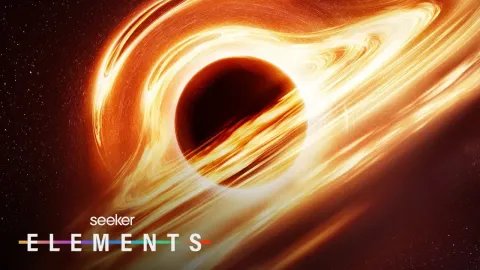
deep in a gravitational field than if you're out there in interstellar space where gravity is not that important. So in general relativity, being in a strong gravitational field is much like moving out there close to the speed of light. If you had someone stay back here on Earth, someone else go near a black hole, for example. A black hole is the strongest kind of gravitational field you can have. Don't go in to the black hole because then you can't come back out. But if you go near it and then you come back, you will be younger than the person who just stayed
behind. You will have experienced less time. Your wristwatch is still clicking at one second per second, but the accumulated amount of time is different because you have taken a different path through curved spacetime. In Interstellar, the Christopher Nolan movie, this was wonderfully illustrated. Kip Thorne, who is a Nobel Prize winning physicist, was the executive producer and one of the instigators of that movie, and he put all of his physics knowledge in there about wormholes and black holes and gravity and time travel. So up until the very last scenes when
they're in the library and everything goes haywire, all the physics in that movie is completely respectable. One thing that is true even in Newtonian ways of thinking about space and time or in Einsteinian ways of thinking about space and time is that these fundamental laws work forward and backward in time. Knowing everything about the universe at one moment predicts the past as well as the future. That's because what we think of as the fundamental laws of physics do not have a directionality to time. They treat the past and future the same. But there's clearly a
direction to time in the world. I remember what I was doing yesterday. I might guess what I'm going to do tomorrow, but I don't remember it in the same way. I have no photographs or memory books of the future. I was younger. I will always be older in the future. What is going on with that? And the answer is it's not the fundamental laws of physics. It's the collective behavior of many many things in the universe that start out in a special state. It goes back to the idea of entropy from the 1800s. The idea of the disorderliness of a system, the randomness, the disorganization. And
entropy increases with time. That's the famous second law of thermodynamics. Why does entropy increase with time? Because there are more ways for a system to be arranged in a high entropy configuration than a low entropy one by definition. And the universe started in a very special low entropy state. Nobody knows why that is true. This is a mystery to cosmology. But the entropy of the universe was very low to start and it's been increasing ever since. and us having memories of the past but not the future. The ability to have records, the fact that we age in
the same direction. This is all because entropy is increasing in one direction rather than the other. Want to support the channel? Join the Big Think members community where you get access to videos early ad free.