11:53



Excuse me, sir. How is Rudy? Excuse me, sir. Sir, excuse me. No, no. I want to ask him something. I want to ask him how he makes a difference. Today, we're going to be exploring Nairobi, Kenya's capital city. This gigantic city is home to a million realities. And today, we're going to delve into either side of these extremes. From the slums to the mega mansions and the ultra wealthy. So, let's dive into this paradox. Today we're going to go try and get a very broad view of the entire city. We're going to be seeing markets, the slums. We're going to be seeing the upper echelon of society and everything in between. We're going to be delving
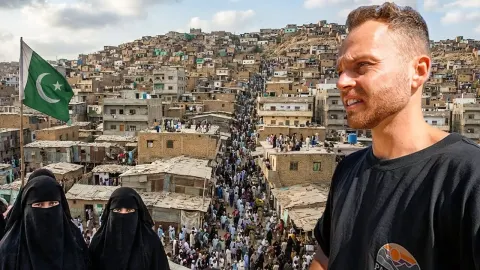
into things like corruption here, the good, the bad, the ugly. Let's head out into this sprawling huge [snorts] African city and see what it has to offer. Let's go. So here we are in Mazar which is a slum here in the city. As you can see this viewpoint is out of this world. This is how a lot of people in this city live. Millions live like this in the city. You can see the kids down here playing and you can see just piles of rubbish. Big dirty rivers with sewage flowing through them. That's the reality of what we're seeing here. Clothes hanging, shacks for
miles all around. This is the reality for millions of Kenyans here. And today we're going to see all kinds of realities of the capital city of Kenya, one of the most famous countries in Africa. Okay. So, we're here with Amundi. And Amundi is a local man. And you live here in Mazare. I live here in Madari. You grew up here? I grew up here. Since you were a kid? Since I'm a kid. What's it like growing up here? Is it a hard life? Cuz I can see some of the conditions look quite hard. A hard life. Not like you're going just like that. Hard to get money and hard to get food. Yes. Do lots of people here have to do crime?
Yes. Like some people here have to steal and stuff to make money? Yes. Is that quite common? Lots of people doing that here. Yes. How old are you? I'm 24 years. 24. Do you have a job? I clean this year. Is that pay? Well, not good. What do you see for your future? My future, I want to see this place to be well. You want to see the neighborhood get better? Yes. Is it getting better or worse?
It's just getting better. It's getting better. Okay, that's positive, right? Yes. Thank you very much for your time. I appreciate it, bro. Thank you. So, I am traveling with a driver today, but we're going to be getting into some things about the government later, corruption and things. So, I won't be showing him on camera. So, just keep that in mind that you won't be seeing the driver, but he is going to be sharing some interesting things, let's say, about life here in Kenya and the government. He doesn't want to be on camera because he says that he could get disappeared.
I'm sure you would have noticed a lot of the buses here have American rappers and things on them. This is a market here where they do up those old buses. They fix them up and then they spray famous rappers from America on them and then they sell them and then you start your own business by driving, picking people up. You'll have a guy hanging out the roof. They're absolutely insane drivers. They cut everybody off. It's crazy. But it's just really interesting that here in Kenya they seem to be infatuated with the American rap scene, especially the old scene, you know, like ice cube era. But here they just fix up all those old
trucks. This is one of the biggest markets in the city and it's everything you can imagine from old clothes brought over from donations internationally and sold a massive open air car market, car mechanics market. So just streets littered with all freelance mechanics doing their best stripping down painting, replacing tires, food, everything. It's a huge mega market. Everybody just doing what they can to survive. These people obviously aren't struggling as much as where we just came from, but still an absolute hustle and struggle to get by. Guys standing on big stacks of clothes screaming. Hopefully
somebody will hear and come and buy their product. An absolute doggy dog world free-for-all. What do you got? Yeah. Are you burning fish? Yes, I'm frying fish. This one goes for 400. Uh-huh. Uh without fried, but when fried is 600. You're using firewood. You're not using electricity. Yes. This a business. Yeah. Yes. It's my It's a business. It's a good business. I rent my school fees, my children, everything is here, right? How many children do you have?
I have seven. Seven? Yes. You're a busy man. Eh, I'm very busy. I have to be busy. Which station is this? This station is this. My own station. Yeah. How's the government here? Uh the government uh we are with them here. We're just fighting normally. Do you think that the government's looking after you? Yes, they are after us. But do they care for you or are they a good government?
I can say they care for us because um they have given us the road. You see they are trying to care for us. Uh we have we are taking some business loans. Okay. So the government gives you loans. Yes. Oh so they're really helping. That's great, right? Yeah. They're helping. R is helping us. We are not saying that is helping us. Yes. And we are giving him second term. I left teaching for this. Oh, so you're a teacher?
Yes, I'm a teacher by profession. What? English or? No, physics, maths. Physics. Yes. And so why did you stop teaching? No, just it was just um it was during corona and uh things went really high and then I decided to come for a business. So the schools shut down and you needed other work. Exactly. Uh-huh. What pays better, teaching or the business is okay? Yeah, because this one is daily. Mhm. Yeah. And uh I'm doing some savings. So I think business is okay. Thank you very much, sir.
Thank you. Appreciate you. God bless you. God bless So if you come here, ask for teacher. In we call it malimu. Okay. Malimu. Say malimu. Malo. Malimu. So we're going to patronize Leo's business, right? Yeah. In Swah we call it a gay. A gay fish. Where do you get this from? From the port Victoria Port. Right. So we're going to buy one of these fried, right? I'm doing this for you. So this called gutting. This is gutting. You remove the scales. So you're scaling it. Then you're going to gut it for us and then fry it for us.
Is that canola oil? Sunflower oil. Yeah, that's sunflower oil. Sunflower Salt. Do you take salt? Yeah. Yeah, sure. Okay. It's now ready for How many fish do you sell a day, Leah? M I say like uh if I have if it's a better day or a good day, you can I can sell like uh 150 pieces of fish. And what's the profit on one piece? Uh a piece can a profit is just 50 shillings. 50 shillings per fish, right? That's half a dollar. So 150 * 50, right? Not a bad business.
Pretty good. Not a bad business, huh? Yeah. But maybe difficult cuz you have to feed seven children. No. Yeah. I'm I'm trying. It's called hustling. Hustler. Hustling. Like Rick Ross. Everyday I'm hustling. I have to do it for the living of the children's children survival rents and whatever. Leo actually reuses the used oil by putting it into these bottles over here and then he sells it to people and they make soap out of it. So just the resourcefulness is very impressive. How much can you sell one of these bottles for?
This Alita. Yeah. This is what is it goes for 300 shillings. That's pretty good. Yeah. That's another business. Yeah. Do you see many foreigners around here? Yeah, they do come. Yeah. In fact, in fact, I do fry even fish that goes to Canada. Okay. Yeah, they come here and I buy for them and they box them to Canada. Really? You Canadians come here, buy fried fish?
Yes. And then send it to Canada. Yes. Really? Yes. You must have a very special recipe, huh? Yeah. I do it. Wow. Even last week I did one for Dubai. Really? And so people come here and how many fish would they buy if it's send being sent to Canada? It depends with the customers that are there because sometimes some people come for 200 pieces, 300 pieces. Seriously? Yeah. Even 400 pieces. In Canada and Dubai, we also have some Africans. We have hotels there. And uh Africans need African food. So they request for fish. So the African populations in other countries like the taste of home so they buy your
Yeah. Mostly Kenyans. Mostly Kenya. Yeah. Have you traveled out of Kenya? Yes, I have. I have been to Poland. Poland? Yes. What were you doing in Poland? Uh further studies. The University of Warsaw. You went to the University of Warsaw? Yes. Oh, wow. Amazing. When was that? When were you there? 2014. And how long? For two years. Yeah. No, it was not for 2 years. Uhhuh.
It was just for an exchange program. How long? For it took me around 1 year. What did you think of Poland? See, did you live there for a year? It was just an exchange program. Yeah. From K University to Poland. But what did you like Poland? Yeah, I liked it. It was friendly. Yeah. Were they welcoming to you? Yeah, they welcoming. I didn't see any I didn't say any I didn't see any problem. What are the main differences that you saw between Nairobi and Warsaw?
The only thing that I saw there was food. The difference was just food cuz any other thing that human do everything was there. So I can just say every only food and culture. I got many friends from there who are Africans coming from Kenya. So and what about the people and the culture? people the culture different yeah it was different so it was a bit everything was social those people are just social they're social okay yeah I didn't see any much problem unless someone had lived there for quite some time but I was only there for one year so I could just see that everything everybody was just social waiting for this you can wait for this and go for 180 So, I've been told one of the main struggles here in Nairobi, like you'll
find all around Africa, it shouldn't really be too much of a surprise, is access to public bathrooms, restrooms. So, you know, that leads to obviously pollution on the streets and everything, but just going to show you an example. You basically have to pay wherever you go to use a bathroom, and they're kind of these underground bathrooms. So, let's have a look. Right. So that's 50 shillings to use the bathroom there. That's my fish in the middle there. So they'll just use any bits of wood that you can find, right?
You'll just use any pieces of wood that you can find to burn. Yeah, that's our fish. Yeah. Nice to meet you, Leah. Nice to meet you. Thanks for the fish. Thank you. All right. Good luck. Cheers. Going to eat this a bit later because it's like 7,000°. So, this is Westlands, which is an up and cominging area in the city. Really nice hotels and big shopping malls around here and things. While we're up here in this beautiful view, I just want to take a quick second and say thank you
to Straight Arrow News for sponsoring this video. In a world where headlines are often driven by opinions, it's hard to find news that simply focuses on the facts. Straight Arrow News delivers news coverage that's balanced and unbiased. Reporting designed to inform and not influence. Their goal is simple. Provide clarity in a very complex world. On the Straight Arrow News app and website, you can explore how different perspectives cover the same story, helping you to see the big picture. You can choose concise updates or in-depth reports. Follow topics that matter to you and access trusty journalism anytime, anywhere. If you want to stay informed without the noise, you can visit straight arrownews.com/indigo
and it's completely free. I'll leave the link in the description. Get balanced coverage, clear facts, and news that you can trust all in one place. That's straight arrow news. Skip the drama, get the fact. So, these are the kind of cars that you see here. This is just in a shopping mall car park in the center, but they're always maxed out. It's a Mayback Mercedes. I'll put the price of the screen. I'll double check. It's the most top range Mercedes that money can buy you. Mayback music. I mean, of course, these contrasts exist all over the world, but you know, when we're at the slum and people are sifting through trash and then you've got this several hundred,000 vehicle just chilling in a shopping mall.
Pretty profound. Most of the tall buildings you see on those side are owned by Somali. Some of them are produce of dirt that money. You said like Somali pirates. Yeah. Money is stolen by pirates from the Indian Ocean. They just come to Kenya and they met a local Somali. They register a company through him just for the name to appear that the house belongs to him. But basically the house is not his. It's that money. So nefarious activities around the world. Dirty money comes here and they make these apartment blocks and then rent them out as a way to launder the money. Is that right? That's what they do. What were you saying about the Somali coming into Kenya?
The Somali coming to Kenya, they use corruption with and when they come here, they are even able to buy the Kenyan identity. They are able to get the Kenyan passport and so the reputation of the Kenyans passport is not well treated because after they are caught doing illegal things wherever they go, they have the Kenyan passport. So they are considered Kenyans, which it's not true. They are not Kenyans. Most of them are Somaris originally. They have double IDs. They have Somari IDs and Kenyan IDs. The bottom line here is corruption. Corruption from the officials, immigration officials. At a fee, if you are interested, you can get a Kenyan ID very fast.
Obviously, Somalia is, you know, constantly at war, has been for many years, and the situation is very unstable there. Many terrorist attacks, unrest. It's just not a safe place to be. The economy is in shambles. Obviously, Kenya has its issues, but Kenya is one of the most successful countries in Africa. It's a desired place to come for many people around the continent. In Kenyan, we have a law that says you cannot deposit anything above a million shillings without giving an explanation as how [clears throat] you got the money. But the Somalias are smart. They always carrying cash in big banks.
Anything they do, they always avoid the bank transactions. Although we have some banks that do work with them transferring those funds and that is how they succeed. I've just met a bunch of university students here on the street. Could you guys tell me what it's like for you guys living in Nairobi? Do you like it here? Yeah, actually we've been encountering much problems about uh the strike of the lecturers. Oh, there's a strike at the moment.
Yeah, there's a strike. For a couple of one month, we've never been attending classes. Oh, the lecturers are on strike. Yeah. Cuz they're not getting paid enough. Yeah. Oh, really? They are requiring um 7.9 billion as the deficit that they have never been paid. Apart from the strike, how is the life for normal Kenyan people? Is it a hard life or it depends where you come from? Yeah. Depends on your I guess I will say it depends from the background you come from. If now there is the working class
people, the low class people. So you find that most of the students who are studying in the university are from the humble background. So life is not that easy. But uh maybe sometimes they get theiration from the government. Are people happy with the government generally in Kenya? Yeah, you guys mixed. Do you guys like the president? Do you like him? Yeah. Initially I used to hate the president. You used to hate him. Now from the time from beginning there was a tournament for football players Kenyan football it happened the a few months ago and the president promised 1 million for each player for a win
okay and from that time there's a dramatic turnar around the president is winning the trust of Kenyans okay so Kenya you think is going in a positive direction yeah of course that's great right because many countries I've been to in Africa it seems to be going backwards but Kenya seems to be going forwards. Is it safe here? Yeah, Kenya is a very safe country because there I remember a few years ago there was some really bad terrorist attacks, right? Like in the shopping mall and the university remember September 21st, 2013 started out as a normal Saturday in Kenya's capital Nairobi. The app market shopping mall is bustling with shoppers. Then Silva Mubishi saloon car pulls up at the main
entrance. Out jump four men, faces covered, assault rifles at the ready, ammunition bags slang over their shoulders. Three grenades are thrown. One hits a coffee shop. Two hit a security booth outside the parking lot. It's the beginning of a terrifying ordeal. Two of them are seen shooting indiscriminately at three groundf flooror restaurants. Meanwhile, on the rooftop, a large group of children are participating in a cooking competition. Two men approach and open fire, killing and maming those gathered there. It's confirmed as a terror attack when Somali based militant group al-Shabaab claim responsibility. 4 hours later, the Kenya military take over. The militants are seen praying and relaxing in
a storage room. 78 hours later, the then president Uhuru Kinata announces the siege over and confirms 67 people died in the attack. In May uh of 2014, there was another incident where four people were killed when a hand grenade was detonated in a bus in Mombasa. Still in the same month and this is in mid June, more than 60 people being killed. This is one of the worst attacks that has been witnessed. And in early July 2014, we have this particular case where 29 people were killed. 10 years ago, security is much better now. More tourists. It's great to see cuz I was here in 2018 and it seems a lot more developed even in the past, you know, 6 years, 7 years.
Look at the modern infrastructures. Big development. Well, thank you guys very much. Appreciate it. Yeah. Pleasure. Yeah, you guys, too. So, we're now entering one of the richer neighborhoods in Nairobi. It's very secure. So, I have to be very careful with the camera cuz as soon as they see it, they'll be very suspicious. Security in Kenya is some of the tightest security in Africa. Everywhere you go, they check the car. They check inside the doors of the hotel I'm staying at. They do a full search of the car. Every time you go in, you have to go through metal detectors. So, here we are at the local golf club for this super wealthy neighborhood. The streets are very clean, nicer cars on the street. No big
crowds or anything. Beautifully maintained gardens. So, these houses is most of these people in some way related to the government. You would say the former presidents and their families live in this neighborhood. those who own industries, big business names, they reside in this area. How does somebody acquire such wealth? It's not all about corruption. There are those people who do genuine business and they succeed in life. And definitely there's a bigger percentage of corrupt individuals in Kenya and it is not particularly only in Kenya. All over Africa, most of the richest peoples are either in the government or they are related to the former or the current government. You say that there's billionaires behind this wall here.
Yeah, there are Kenyan billionaires who live near neighbors, but I wouldn't mention their names, but there are several billion billionaires around this area. Actually, three of them live here. Successful businessmen. You were saying being a policeman's basically a business and you buy your way in to become a policeman. So then you can extort and take bribes from people. Their allegations are maybe proved allegations of young men giving a lot of money to those who are doing the recruitment procedures. They get a lot of money to join the forces be it the military or the police after they give money to the to bribe their way into the forces. Definitely the idea of them even
coming to the forces is to make money and that is why you find a lot of corrupt policemen correcting money because how they join the forces is through giving money and so they have to get their money back and make more. You've seen a lot of policemen try to get bribes from you and your time here. That is a normal occurrence here. Go to a police station, you want to make a statement, you may end up giving money or you will not get the service as a messiah. If you find someone is selling drugs, it is very difficult for you to go and report to a police station because maybe those selling drugs, they have a protection from the police force. So you don't dare go and report. You
will be putting your life in danger. You never dare go report to a police station otherwise you may disappear. So, just come up to this beautiful rooftop cafe looking over the national park here where you can do safaris and see all the famous animals and things. The touristic side, there's like foreigners around here, the swimming pool, middle class, upper middle class canyons here. Very interesting to show those contrasts, I think, and to meet the people that we've met, especially Leo there, physics teacher, traveled to the University of Warsaw in Poland. he can make better money selling fish on the side of the road than he can contributing to the education system. As
a person who's studied abroad in Europe, he brought those skills back and they're not worth anything in comparison to selling fish on the side of the road. It's really unfortunate, right? Cuz you'd hope that somebody who's put that much effort and resources into bettering themselves in education. You can imagine the effect that has on the education system and the trickle down effect that that has. And you know, you've seen the different neighborhoods. Couldn't even see the billionaires, the millionaires houses because they were just so like the gardens were so beautiful and things. You couldn't even see the
houses. The people here though are so kind and so friendly. Even just coming up in the elevator, a staff member just making conversation, be walking down the street, people just make conversation with you. You know, obviously being a former English colony, English is widely spoken here. That makes it really nice to get to know people and have really authentic interactions with people in the streets. There it is. Okay, so I just unraveled Leo's fish, so we got to do a taste test. Wow. Genuinely absolutely delicious. No wonder the Canadians are importing that stuff.
Physics teacher and an amazing chef. Leo is an all round great guy. So where I'm staying is called Westlands. It's quite a nice area. It's not super busy. It's quite quiet. The streets are clean. You can see Leo there. He was seemed happy with the government and he said that he got a loan for his business and things. And then my driver, which obviously I couldn't show, he was quite paranoid about being on camera. He was even thinking that they were going to be able to trace him through my phone and things. Some people aren't like that. Some people like the government as you saw with Leo and other people really don't. Any Kenyans watching this video, is there freedom of speech here or is
there not? Feel free to let me know your thoughts of life here and everything. I would love to hear from you in the comments section. So, I hope that video gave you a broadspectctrum taste of lots of different areas of Nairobi. There's also, you know, there's the middle-ass apartments and everything in between. I really like Kenya. It's my second time here. I was here in 2018. The people are so great. They're so friendly and just charismatic. I recommend visiting Kenya if you haven't already. Lots to do here. Obviously, you got the safaris. I'll see you in the next video. Thank you very much for watching. And in case I don't see you, good afternoon, good evening, and good