17:38
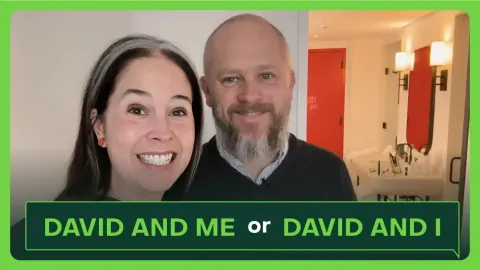


Let's just say you spoke like this with a bit of an Italian accent but very fluent at the same time. People can understand you fine. It's not a problem. Would the situation have been the same? Hello. Ciao. I'm here with two wonderful characters, two wonderful people. You are Sonia David from Italy. Rome. Italy. I was supposed to speak English. I was speaking Italian. That's okay. You're from Torino, Italy. North of Italy. So Rome, Rome, Torino or Tin I think it's tin in English and we're going to be speaking in English and then God knows
what's going to happen. Right. So exactly we all speak a few languages and but we wanted to focus on one aspect of language learning which is pronunciation. Right. Let's start with Sonia. Sonia, can you tell us how do you feel when you speak English with an American accent? Do you feel cool? I feel cool. Of course you do. Of course it's cool. I love like the vowels. I love how I can say May. It's going to be May. like, you know what I mean?
Yeah. You can't do that in Italian. Not really. It's true. Italian actually is a very po Well, not I wouldn't go so far as to say it's a poor language, but in sound inventory wise, we only have basically uh five vowels, right? Or maybe seven. Yeah, seven depending on the variety. Yeah. Yeah, you even made um I think a course about a time pronunciation, right? Yeah, exactly. So I mean yeah, English has like 20 vowels or something like that. 56 I think 56 vowels. So yeah.
Yeah. So it's it's actually it's difficult for an Italian generally to speak English well because we have a E or U or in English you have a o a etc right. Yeah. But well first of all the question is how did you get to speak so well to both of you? Well, I think it's like because I love music and I've always liked the English language. I don't know why. I think rap music. I think I thought it was cool and I wanted to like I'm really not sure. I was little, but it's not because my parents are from an English-speaking country. Not at all.
It was just me and I was little and I was like, "Yeah, I want to be good." Yeah. I have kind of a similar story because for me it was TV shows, films, a lot of YouTube videos because it was the early days of YouTube I remember and just a lot of listening and I was really into it which I think is what made a difference in both of our cases, right? We really like I mean and in your situation as well. I would add that it's it's true that it really makes a difference when you like something of course.
Yeah. Um, however, I think in my case, maybe it's in your case as well, it's not just that I wanted to sound like an American, I wanted to be like an American. I wanted to blend in. I remember that I was watching all these movies and then after watching the movie, I was reciting these lines constantly, repeating the lines. I also took a look at the script of these movies with Speak Up. You remember you had these back in the day? I don't know. Nerd. Such a nerd. I am a nerd. I am. We all are. Just kidding. I confess to it. Kind of have to be one. But in a good sense, right? Like it depends. Like you got the bad nerd and you got the good nerd, right?
Are you saying there are bad nerds? Luca, you can't say these things on YouTube. Correct. Anyways, anyway, the my point is that it was for me an identity thing. It's not just like speaking well, but when I speak English, it feel a little bit different, right? Don't you feel a little bit different than when you speak English when you speak Italian? the way you talk, the way you use your hands, the things you say. Have you ever thought about that? I think it depends a lot on the people you interact with in that language and also yeah how the people are in general because you tend to become more like them, right? And so like in Italian maybe I don't know you guys are from
Rome. There's a very different sense of humor in Rome. If my grandmother had wheels, she would have been a bike. You know what? you know, and it's just it's very different than if you interact with pe people from the US and you sort of kind of mimic them, you know. I think you're right. I think we uh when we speak when you speak any language, I think a bunch of people you had contact with activate in your brain. You're the sum of the people you spend time with. Yeah. Don't they say that you're like the average of the five people you spend the most time with? I think it's kind of the same thing with languages. your identity in a language is sort of
the average of the people you either spend most of your time with or maybe even like just listen to cuz you know absolutely you know you kind of imitate people also that you listen to a lot you know however provocative question do you believe in talent when it comes to speaking sounding almost like a native or do you think anybody can do it from the perspective of a teacher because you're an English teacher right how can I give you weapons you know I can't do that oh Yeah. Definitely. Especially when it comes to pronunciation. It's everybody anybody can improve. But if you're I don't know how to say that.
Like in a diplomatic way, right? If you like music for example, like it's easier for some people. I agree. What do you think? Yeah, I think the same. And I think it's something that the problem with saying this is that it can discourage some people because they think oh I just don't have an ear. The truth is you can always get better. You can always improve and also you have to set realistic goals when it comes to pronunciation and just being clear and you know being understandable and understood is the most important thing.
But then if you really want to become extremely good then it's like with any sport or anything that you learn a little bit of tal talent can add what maybe you know you can't have just through work but work can get you very far yeah I agree I still don't sound native after years and years of studying but I'm pretty comfortable with my level of English level and I'm happy and I feel like my accent's good but it's Not like when I go to the US after like 5 minutes of conversation most people are like, "Oh, I like your accent. Where are you from?" It's very cute.
Well, that's the trauma of Yeah. But is it so important to sound like a native? Like for example, when it comes to speaking a foreign language, of course, we would like, you know, when someone says, "Oh, your accent is cute." Then you stab, right? If you like a stab because you say, "Okay, I like to sound like a native." Maybe it's an ego thing, but come to think of it, why is it that you want to sound like a native? Have you ever thought about that? Is that a question of ego, of identity? Do you feel cool when you speak like a native? What has it brought about in terms of I feel cool, but I don't think it's like identity. I, for example, I love American English, but I've never wanted
to live in the US. I've never had the right. No, you didn't. Yeah, because I was married to an American, but Right. I didn't really want to live there. I wanted to live in Japan. I've always had your Japanese dream. Okay. Yeah. So, I didn't want to apply for a green card. Hold the phone. So, you had a Japanese dream, but you found yourself on the other side of the planet. Like, whatever reason you found yourself living in the States. Love. It's because I met my ex-husband here in Rome. Okay. Then we moved together to Japan and then like he Japan was my dream. It wasn't his dream. So right at one point we had to go back. Okay. But I've never
I love the American entertainment, music style, but I don't have the American dream. So I don't think it's like I want to be American. I truly think I love the language. It's so cool. It's like, you know, in my case, actually, but I completely understand you. In my case, I really wanted to be like an American. I wanted to live in the United States. Now, now my dream is completely different. Like I've completely changed as a person. I'm not interested in I'm not hey guys Americans I love you lovely country and everything but I it just happened in the moment when I
really had this burning desire to sound like an American be like an American blend in American society if I had traveled and move there then that was the moment where I got the accent right uh but now I it doesn't matter anymore and but the accent stayed with me you know so I kind of created an identity in my find like the American identity and that is part of me when I speak. But at the end of the day, you know, I think that the desire does count in my case when people ask me um how do you pick up an accent? It's always a number of factors that align. It's not just one, you know, there's many things, but the desire of blending in for me was important. Uh and
that kind of made a difference. I think for me it was a desire. What kind of desire? I want it to be good. And it's just fun. I mean, for me, it's just a fun thing to imitate an accent. And we were talking about it in a in the video we made, which wasn't a very serious video. I don't know if it's ever going to get published. I don't know if it gets published. Link below. But it's just a fun thing for me and for people like us to imitate accent. But it's not for everyone. Some people just don't care. Some people just want to
communicate. And you know, and it's fine as long as people understand you and there are no hindrances to the way you speak which make it really hard for people natives to understand you. I agree. However, I have to also add that as far as I'm concerned, I'm pretty sure this has happened to you as well. All sorts of things happen when you speak a language well, right? Maybe you're like in line and then you just an example. I made friends with Garrett. Garrett is one of my best friends, American friends from Fielding,
Philadelphia. And what happened is that we were sitting, it was T, you know, we're this nice, lovely neighborhood in the summer. There were a lot of people sitting around this fountain uh at this at the center of the square. And all of a sudden, I hear a loud burp, right? So I turn around and say, "That was one loud burp." And that sentence pronounced that way, you know, created the entire thing, the entire experience. Oh, where you from? You sound like an American. Blah. And then I be, you know, we became friends. How do you know he wasn't Italian?
What do you mean? I like you heard No, I heard the BB had an American accent, distinct American. This is a good question to give you a little bit of more of a background. I heard before I was hearing the conversation obviously they were like American. So when she burped then I turned around then I spoke to them directly in English and that is what generated the oh and so many other things like had happened. Just another example in a romantic sense. For example, I heard I was at the um in Prague and I heard these there were
three uh cute French girls uh in at the hostel that were sitting there and I asked him excuse Frances the stupidest question ever. Of course they're French. They're speaking French. But sometimes you just need to just need a even a stupid question. Did it work? It did. She became my girlfriends for five years. So um Oh wow. So yeah. So she was no but I mean it the thing is that sometimes and this is also a social thing when you uh we tend to have a lot of filters of should I so for
example you see a cute guy a cute girl should I talk to her I'm talking about romantic but not only and you just talk and all sorts of things happen speaking languages speaking languages with a good accent brought about so many major things in my life that I say it's definitely worth it whether people can speak with a great accent Sometimes it happens, sometimes it doesn't. And you attribute that to the accent specifically. Like if you had been fluent, but your accent would have, you know, were had been I can't conjugate this the right way.
Yeah. But how bad? Let's just say you spoke like this with a bit of an Italian accent, but very fluent at the same time. People can understand you fine. It's not a problem. Would the situation have been the same, you think? Well, it depends. Well, if you're talking about it really depends on the situation on the person. I don't know cuz I don't live in a parallel world and universe where this is had happened. However, I think it the experience will be different because if you speak Italian, if you speak English like this, hey, how's it going? It would not have been the same, right? Um, so it's me, it's a conversation starter. Anyway, you
I can speak like this. I've tried for example, I've approached someone and speak how's it going? And then to have fun and then I turn I and then while we're having our conversation I started speaking like this. They were like what you know. So you start very strong and progressively gets a little bit better and then by the end of the 10-minute conversation you're basically a native. Yeah. And they were saying yeah I remember there was a guy was slightly drunk an American guy said this conversation is odd. You sound strange sound different like at the beginning you sound like an Italian now sound. and
he was really confused and all sorts of things happened fun. It can be fun but strange idea of fun. I think ultimately it's an enriching experience. I mean, at least for me, but I think I'm pretty sure this has happened to you guys that people ask why you speak so well because there's not a lot of people speak the languages well. And when you have attention to detail and when you speak, I think the sound of a language, the music behind the language talks to the heart of people. You know, just you connect with them in a different way. The connection is different. So, they ask you stuff like why they you're intrigued, they want to know more, right? And this
drives a conversation and then the rest is history as they say in a lot of five years later. Five years. You're still with that person. Two children. Two kids later. Yeah. Two children later. No, I'm kidding. No, no, no. Luca doesn't have any kids. We can say that. Yeah, I hope so. You hope so. What? When it comes to one-year-old Dante Pierre, you are the father.
Okay. Well, going to cut that. That's kind of awkward enough. Anyway, thank you. I think um there's more to it. I mean, we can talk about this for hours and hours, but we wanted to give you an, you know, a perspective on three people, three different people, three Italians. Giving you a perspective of what it means to um to speak a language with a good accent, but also the limits. We have to be realistic about that. If I still remember to this point, there was a student of mine. I've also worked as an accent coach uh or pronunciation coach but it's more like accent and you know about these courses of accent production right so this guy comes to me and says
um I want to speak like an American you've been living in America for 25 years you had a very strong Indian accent and that did not change because realistically we're very good at learning things but we're not very good at unlearning things right so once you have a bad accent if you speak it if you speak English like this for 30 years speaking English like this is going to be a little bit different, right? Difficult, right? You agree? Yeah. So, and it's also a matter I mean, you wanted to end the video, but you know, no, you can ask I think an interesting thing is that it's hard for some people to let go of
their accent because it's really rooted in their identity. And I had a student of Italian. She was actually a second generation Italian and she spoke pretty well, but she couldn't do the Italian R. Not because she physically couldn't make the sound. She could, but she found it so awkward to say Rosa instead of Rosa. Rosa. She had this British R. And she just f found it impossible because it was so weird for her. And I found that really fascinating.
She didn't want to be the one like, you know, the American who goes to the restaurants like, "Can I get spaghetti?" Like, she didn't want to be that girl. Like super Italian. You mean like super Italian but fake? Yeah. Maybe. Maybe not. And then also she was I think in her 50s or something. So maybe I don't know that makes it even harder. I don't know.
Yeah. But it was really interesting for me to see you. And some people just can't let go of their identity and embrace this new weird way of speaking, new sounds, new inonations. It's just do it. Try do it try. Yeah. You're right. Uh you're actually this is a very important point. Steven Crasher is a famous linguist um that talks about that. Basically there's a PDF that you can download. He just writes something. I don't remember the exact title, but the it goes along the lines of a conjecture on accent acquisition in second language learning or something like that. And he
says something really interesting. He says basically people can speak with a good accent. They just choose not to for psychological reasons because uh and this goes back to uh by the way something we all share. Uh we're going to talk about this in a second that we belong to a tribe whether we want it or not. We are all Italian. We can speak a bunch of languages, but we're still culturally Italian. And we identify subconsciously or unconsciously or nonsciously as the Italian tribe. Now, what happens is that when you learn a new language, then you have to embrace another tribe. And when you want to embrace another tribe with through sound by speaking well, then you have this
resistance that a lot of people have when it comes to, oh, this guy sounds strange. In fact, we're all mocked at school for sounding different, right? So some people want to conform saying okay they're gonna mock me so I'm gonna speak like this like them so that they don't mock me right anymore but then I my desire of sounding American was so strong that I didn't care what the others said I kept speaking like this and in fact at the in the end I started speaking differently but the this thing of the tribe is really important some people never let go because they have this filter we call it the effective filter right so we all I think the way we are we like imitating
we have things in common we like imitating um you know other people but sometimes we let ourselves go. Sometimes you have to let yourself go to embrace another identity. You have to let go of the filters that hold us like we have to be conformed to the society, right? Yeah. I think this really at the end of the day, yes, the sound, the ear, maybe some people pick up sounds, etc., but at the end of the day, I think it's a psychological thing. We let go and we just speak like the way we want to speak independently from what other people say. Yeah. I don't know if this makes sense.
I think it's that to me it's definitely an element. I wouldn't say it's the only thing. I don't think it's that you only have the psychological element. you have everything else. So maybe you don't have that fear, but it's still hard for you to get a good accent, but it's it is like a filter that makes everything harder downstream. Exactly. Well guys, girls, that's it for now from Rome. Thank you very much for listening. I hope we hope you found this useful and we'll see you next on in the next video on YouTube. Ciao.
See you next time, guys.
Read the full English subtitles of this video, line by line.