
4:17


The victor in a war is not determined by the side that has the longest list of kills. It's determined by the side that achieves its strategic objectives. I'm Professor Tar Massud from Harvard University. Let's answer your questions from the internet. This is tech support Iran. Iceberg.com asks, "What are the chances that Iran already has nuclear weapons?" I think that the chances are fairly low. First of all, there's no public information that the Iranians have a nuclear weapon. The United States government hasn't alleged that the Iranians have a nuclear weapon. Israel hasn't said that the Iranians have a
nuclear weapon. And critically, the Iranians themselves haven't said they have a nuclear weapon. And if they had one, you might expect them to say they had one because the main use of nuclear weapons is to deter precisely the kind of attack that the Iranians are suffering now. Are they close to getting a nuclear weapon? You often hear people say that Iran is two weeks away. What are they talking about when they say that? They don't mean that Iran is two weeks away from having a missile that could deliver a nuclear warhead to Tel Aviv or to New York. What they mean is that Iran is two weeks away from having enough enriched uranium for them to actually be able to build a nuclear
bomb. Uranium basically exists in nature in two forms. One form is uranium 238 which is not good for building bombs. But there's another form which is a kind of unstable form called uranium 235. And that's what you want to use to make a nuclear weapon. But it exists in nature in very small quantities. So the process of enriching uranium is basically increasing the concentration of uranium 235. And if you just want to run nuclear power plants, you only need to get to about 3% of uranium 235. If you want to build a nuclear bomb, you need to get to 90% enrichment. The Iranians right now are at 60% enrichment. And it's estimated that if they wanted to go to 90%, it would take another couple of
weeks. Even then, once they have enough enriched uranium to build a bomb, there's still a lot of steps between that and actually having a deliverable weapon. They have to develop an explosive core. They have to figure out a way to trigger it. They have to put it on a delivery system. And all of those steps are ones that we can detect and potentially interrupt. And so Iranians are close to having enough nuclear material for a bomb, but they're further away from having the bomb itself. Here's a question from Biny2. Was the Iran nuclear deal a good thing? What Biny21 is referring to was something called the Joint Comprehensive Plan of Action or the JCPOA, which was a deal that was
signed by Iran, the United States, the United Kingdom, France, China, Russia, and Germany in 2015. And this was basically a deal in which the Iranians agreed to essentially give up or postpone their nuclear program in exchange for sanctions relief. They weren't going to enrich uranium to the much higher level needed to build nuclear bombs. They were going to limit the amount of that uranium that they stockpiled. And on top of all of that, they agreed to a very serious regime of inspections by the IAEA, the International Atomic Energy Agency. Now, was it a good thing? It depends on who you ask. People who think it was a good thing say, "Of course it was a good thing. We got the Iranians to put their nuclear program on ICE, and we didn't
have to go to war." People who think it was a bad thing point out that first of all many of the provisions of the JCPOA were set to sunset or to expire after about 15 years. So people felt well this is just putting a pause on the Iranian nuclear program and after 15 years they're going to race to a bomb. The other reason that some people thought that this was not a very good deal was they felt the inspections were not strong enough particularly with respect to some of Iran's military sites. And then they also were concerned that the sanctions relief that we gave to the Iranians just put a lot of money in their pocket that they could spend on their proxies like Hezbollah and like
Hamas and like the Houthis in Yemen. And so when President Trump got elected, he said he was going to undo the deal. and he did undo the deal and opted instead for something called the maximum pressure campaign which is really intended to squeeze the Iranians to deprive them of money and also to make sure that they did not get to develop a nuclear program. How did the Iranians respond? They responded by basically enriching uranium and so now they've got about a,000 pounds of uranium that are enriched to about 60% and they stopped all of the inspections. when President Biden came back into office, he tried to get the JCPOA back, but the Iranians didn't want to go back to the deal of
2015. And they insisted that any deal that they made, they wanted guarantees that no future president could reneg on it the same way that President Trump had reneggged on the 2015 deal. That was obviously something that President Biden couldn't promise. So, was the Iranian deal a good thing? My answer would be it was good, but it probably wasn't good enough. Here's the problem. Iran and the United States have many deep disagreements about a whole range of things. So, it seems kind of inevitable that a limited deal on just Iran's nuclear program was destined to collapse under the weight of all of the other things we disagree on. Here's a question from Quora. Is Iran really that much of
a threat to the United States of America? There's really two views here. One view which is the view held by the president of the United States is that absolutely Iran is a threat to the US. First of all, the Iranians have made no secret since 1979 about their very strong enmity to the United States. They constantly chant the regime at least marbar ama death to America. It's almost like a national anthem. When that regime came into being, one of the first acts with which it announced itself was the taking of hostages at the American embassy in Tehran. These hostages, about 50 of them, were held for more than a year. Since then, Iran has invested in
proxies like Hezbollah, which killed almost 250 Americans in a suicide bombing at an American military base in Beirut. And then of course there is the fact that the Iranians have been developing a nuclear program and some people say also developing a missile program that was intended to enable them to deliver whatever nuclear weapons they develop to the American homeland. So that's the argument of those who say Iran is a threat. Other people say look Iran was aspiring regional power at best. if it represents a threat, it's mainly to Israel and to the other countries in the Persian Gulf and it's eminently manageable. And then they also point to the fact that Iran is driven by a lot of internal conflicts. There are
lots of people who are upset with the Iranian regime. And if we would just stop rattling the Iranian cage, maybe some of those people within the Iranian regime who want to uh change it would have a chance of success as opposed to us constantly causing people to rally around the flag in that country. Today, now that we're at open war with the Iranians, you've got to say they absolutely are a threat. The aptly named Dangerous Cost 6367 asks, why are people talking about the Strait of Hormuz and why does it matter so much? Here is the straight of Hormuz. This very narrow waterway. It's about 20 m wide that is in the territorial waters of Iran and the Sultanate of Oman. Iran has about
12% of the world's proven oil reserves. That's a lot of oil. And through the straight of Hormuz passes about 20% of the world's oil. If you want to get oil out of what's called the Persian or Arabian Gulf, it mainly has to go through the straight of Hormuz. Now, Saudi Arabia has a pipeline that lets it send some of its oil across to the Red Sea. The Emiratis have a pipeline that also allows them to bypass some of the straight of hormones, but it's not enough. And when there is risk here, when it looks like there's going to be a supply disruption, that gets priced into energy markets and you and I pay higher prices at the pump. Now, in addition to the straight of hormones, there are two
other places that you might have heard people talk about. One is Carg Island which is right there and that's a major Iranian facility for loading tankers and for storing oil and there is now a proposal on the table for the United States to actually seize Car Island and that would deal a really crippling blow to the Iranians. The second is actually on the other side of the Arabian Peninsula and that's right here. That's called the Babel Mendde Strait and that separates Yemen from Africa on the Red Sea. Practically everything that goes through the Suez Canal has to ultimately go through Babel Menddev. We're talking there about 10 to 15% of world trade. And guess who operates right here in
Babel Menddev? An organization called Ansar Law known popularly as the Houthis. They are an Iranian client and they have the capacity to really disrupt and interdict shipping through the Babel Menddeb Strait. And so between the straight of Hormuz and Babel Menddeb, the Iranians have the ability to put a major hurt on the global economy. N891 asks, "What would a realistic win for the US even look like in the Iran war?" Well, if you listen to President Trump, we've already won. In fact, we've won more than anyone's ever won in the history of winning. He often points to the tremendous battlefield achievements of the American and Israeli military.
That we are taking out their air force, that we're taking out missile sites. And all of those things are true. But here's the thing. The victor in a war is not determined by the side that has the longest list of kills. It's determined by the side that achieves its strategic objectives. If our objective is just to end the Iranian nuclear program, well, first of all, President said we'd ended the Iranian nuclear program last summer. So, there's a question as to what we need to do this time around to really, really end the Iranian nuclear program. That's still a pretty high bar because we will never be assured that Iran's nuclear program is completely obliterated until we have figured out
where that,000 lbs of enriched uranium has gone. And so that might indeed require some ground presence to try to find it. Other people say that we will have achieved victory when we've replaced the Islamic Republic with a democratic or at least America friendly regime. That's a very high bar that might require a very sustained military engagement. The really interesting thing here though is that though the bar for victory for us might be high, it's pretty low for the Iranians. All they need to do is survive. Mike Torson asks, "Why is Iran bombing seemingly completely unrelated countries?" It definitely looks that way, right? Let's look at a map here. So, the Iranians
have been launching missiles and drones obviously at Israel, but they've also been launching at Kuwait, Bahrain, Qatar, the UAE. They even launched an attack on Oman, and Saudi Arabia. Now, the Iranians say we're not hitting random countries. We're not even hitting those countries. We're targeting American facilities in those countries like American bases or as they did in Saudi Arabia, the American embassy. And the reason that the Iranians are doing that is because what they want to do is they want to raise the cost of this war in the hope of getting the Americans to conclude it's not worth it to continue and we need to make a deal with the Iranians. One interesting fact is that
the United Arab Emirates has taken more fire than Israel. In fact, it may have taken more fire than all of the other countries combined. And part of the reason for that is because the UAE is such an important economic hub. So far, those countries have been calling for restraint. They've wanted an end to the war and they haven't joined the US and Israeli war effort, although that might change. But regardless of whether they join the war or they just sit it out and root for the US and Israel from the sidelines, when the history of this war is written, people are going to ask why the Iranians turned the Gulf countries forced them from neutrality into open hostility. It's almost like
they were reading from a book called How to Lose Friends and Alienate People. Tide Watcher 7819 asks, "If President Trump ordered a ground invasion of Iran, would it be a long war or an easy victory? If the United States has a more limited aim, like seizing the enriched uranium or taking Carg Island, those things would be hard. But there's no reason to expect that they would create multi-year commitments if the US remained focused on task and mission creep didn't take place. But if the ground invasion took place with the aim of replacing the regime with one that's more friendly to us, then there's lots of reasons to expect that would be a very long war of the kind that we experienced in Afghanistan and in Iraq. The Islamic
Revolutionary Guard Corps is very adept at war fighting and they would absolutely put up a major fight should we try to invade the Iranian homeland. And these are the people after all who train Hezbollah and who train the Houthis. So they know what they're doing. Another big question is how would the Iranian people themselves greet us? Would they support us or would they see us as replaying a centurylong script of foreign intervention and domination? There's definitely those who say that we could go into Iran and make short work of this regime. My sense though is that the people who say that, who say that this would be an easy victory, aren't thinking hard enough? Here's a question
from Quora. Do Saudi Arabia and Iran hate each other? Prior to this conflict, Saudi Arabia and Iran had a pretty decent relationship. they'd kind of buried the hatchet with Chinese mediation in 2023 and restored uh full diplomatic relations. That said, there absolutely are tensions beneath the surface for these countries and they're long-standing. On one level, it's just they both happen to be two big countries that want to have hijgemony in this part of the world. One thing you'll often find is that Saudis and Iranians often argue about what to call the body of water that separates them. Saudis like to call it the Arabian Gulf. Iranians get really upset when you call it that and they like to call it the Persian
Gulf. So that speaks to the degree to which both of these countries want to be seen as the leaders of the region. There's also a kind of economic competition. They're both major oil producers and they don't always see eye to eye on prices. And then there's ideological differences. On the one hand, Saudi Arabia adheres to a brand of Sunni Islam that sees the Shia Islam that Iranians practice as a form of heresy. And that has absolutely been a source of conflict. And by the way, Saudi Arabia has a population of Shiites in its eastern province and it's always worried that Iran is going to instigate them and turn them into a fifth column against the Saudi state. The Iranian state is based on a revolutionary
ideology. After all, in 1979, they came to power and they promised to export an Islamic revolution while Saudi Arabia is a conservative monarchy. They're not so interested in Islamic revolution. And then finally, the Saudis are typically pro-American. They've had a good relationship with the United States ever since the World War II era. And obviously Iran sees itself as the leader of an axis of resistance against the United States. And so it's inclined to see Saudi Arabia as kind of a an American puppet. Now that the war has commenced and that the Iranians have hit targets in Saudi Arabia, the reporting is that the Saudis are urging the United States to finish the job and to finally rid the region of this irritant that has
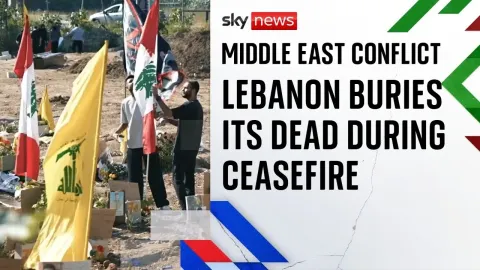
caused so much damage. This one is from the explain like I'm five subreddit. Explain like I'm five. Who is Hezbollah? Hezbollah is a militia and political party that operates in Lebanon. Hezbollah means party of God. And it was established in 1982 with serious Iranian support for two reasons. The first was to protect Lebanon Shiites. They are about 30% of the population and they weren't always treated so well. But the second purpose was to push Israel out after its 1982 invasion of Lebanon. Hezbollah has developed into probably one of the most capable military forces in the Middle East. They have waged war against Israel. They were a major part of Iran's
attempt to shore up the regime of Bashar al-Assad in Syria after a popular uprising in 2011. There are reports that they uh trained Hamas and helped Hamas prepare for the October 7th attacks against Israel that killed more than 700 civilians. One of the things that his beloved did after October 7th is they would launch rockets into northern Israel resulting in a serious evacuation of Israelis from that part of the territory. And with the war with Iran, Hezbollah started launching rockets again at Israeli targets. They really are the key organization that people talk about when they talk about Iran's proxies around the world. Now, today, Hezbollah has suffered some serious blows. September of 2024, the Israelis
basically decapitated the organization. First they planted a bunch of exploding pagers that killed and maimed several hundred Hezbollah leaders. And then that same month they actually killed the secretary general of Hezbollah, a cleric named Hassan Nasallah in an air strike. And so Hezbollah today is a much diminished organization. The Israelis are now saying that they need to finish the job and eliminate Hezbollah entirely. And so they have actually invaded Lebanon and moved all the way up to the Latani River with the express aim of completely ending Hezbollah. Here's a question from Quora. Why does Iran hate the USA and Israel? One of the big reasons that Iran hates the United States is that they still hold a grudge
against the US for supporting the Sha and for helping orchestrate a coup against a more or less democratic prime minister in 1953 whose only sin was trying to nationalize Iran's oil assets. Another reason they hate us though is because we support Israel. And they hate Israel because they see it as having stolen Muslim land and oppressing Palestinians. In fact, this is something that really matters to the Iranian regime. They named the special forces of the IRGC, the Kudz force, which means the Jerusalem Force. On the last day of Ramadan, they hold a rally called Kudz Day, which means Jerusalem Day. You might be asking, why would the Iranians
care so much about Israel? It's so far away. And there's really two explanations. One explanation is that Iran is based on a panislamic ideology. And so naturally, they're going to have deep sympathy with Muslims around the world. And Muslims do care about the fact that Jerusalem is no longer under Muslim control and that Palestinians are oppressed by the uh Israelis. Another argument is that it's totally cynical, that what the Iranians want to do is they want to appeal to the Arab street in their campaign for gaining influence around the region. and they know that playing the anti-Israeli card is a sure way of doing that. So, those are all the questions we have for today. Thank you for watching Tech Support Iran.

Read the full English subtitles of this video, line by line.