
11:18
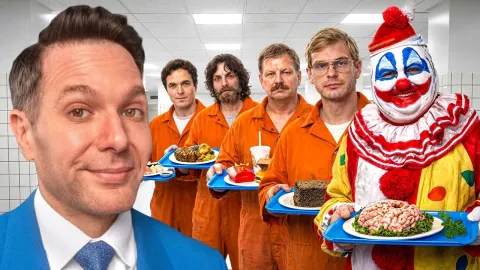


Hey, I'm Ethan, your real life English fluency coach. And the words that we natives use change from the US, UK, Australia, and South Africa. Each country adds its own unique flavor to the language. In today's lesson, we'll explore some of the most common vocabulary differences between American, British, and Australian English in a fun lesson I recorded a while back with two amazing fluency coaches, Andrea from the UK and Olly from Australia. We decided to bring it back because these kinds of differences just don't get talked about enough. and understanding them will not only help you enjoy movies and series from different countries, but also to feel more confident when connecting with native speakers. Plus, it's just a lot
of fun to learn about these kind of differences. Now, get ready to laugh, mates. Let's jump right in. Right now, we're going to start with vocabulary differences. So, we will look at some different pictures and basically each of us will say what we've called that in our part of the world. So, are you guys ready? Bring it on. Ready. All right. So, this first one, how would you call that, Andrea? This is, of course, a pepper. I almost agree with you. I would call that a bell pepper because we have many different types of peppers in my part of the United States at least. And in Australia, it's a little bit different because for me, pepper is
something really hot and spicy. And this is not spicy. This is called a capsicum. This is like the most bizarre word I could have ever possibly imagined for this vegetable. It's a really difficult word for something quite simple. What would you call this, Olly? Yeah. So, this is an elevator. You would call it an elevator as well. That's what we'd call it in the States, Andrea. No, no, no. I'm sorry. This is called a lift. I suppose that makes sense. that kind of like lifts you up. But that sounds like a little bit I feel like that might be what I would call uh it for a kid or something like that.
Well, I don't know. I think elevator is maybe a bit advanced for what it is. A lift is just such a lovely easy word. Yeah, that's true. It's probably important to note as well that we would say you're going to take the lift or get in the lift. And this shouldn't be confused with giving someone a lift or taking a lift from someone, which would describe a situation where you take someone maybe in your car to a place that they need to go to. I think in the States and in Australia as well, you probably use the same term, right? To give someone a lift.
Absolutely. Yep. Yeah. So, in Australia, we call this a petrol station, but sometimes we can even shorten it and say a petty station. So, someone might say to you, "Oh, I need to get some petrol. Let's go to the petty station." I love that. It's very similar. We don't shorten this word like you do, Ollie, in Australia, but in the UK, we also call this a petrol station because it's where you go to put petrol in your car. What the heck is petrol? You put gasoline in a car. We would of course call this a gas station because it's where you get gasoline.
See, when we think of gas, we think of air when you think of the elements. So, if you're saying you're going to a gas station, it makes you think maybe you're going to pump your tires up because they need air or something or you need gas, you know, like when you have an operation or something, you need gas and air. Yeah, we think like you actually, Andrea, exactly the same. Gas is air, not what you put in your car. It's not gas, it's gasoline. Okay. What would you call this, Andrea? These are of course sweets for us. If you say sweets, we could actually say that as well, but it might also refer to like anything sweet. So if you have a sweet tooth, you might want
like a cupcake. You might want a pastry or something like that. And those could all be sweets. For us, this certain type of sweet we would call candy. Okay. And down in the land down under in Australia, we call these lollies. Like a lollipop. Yeah. I mean, well, we actually call a lollipop is a lollipop. Um, and these are lollies with I es. But are they on sticks and things? No, they're not on sticks. I guess like lolly is even more general than sweets. What would you call the place where you buy this? Would it be a lolly shop?
Oh, I don't even know if we have these types of stores. We I don't think that's a good question. We've got Australia stores. We have candy stores. Yeah. Oh, and we'd call it the sweet shop. The lolly shop. In the States, if you say that, it's like that shop is sweet. Like, it's an awesome a really great shop. I love how we have all different words for this one. We've got three words there for one thing. So, moving on to the next one. This, of course, would be called a drugstore or maybe even a pharmacy.
Yeah. So, I we could in Australia, we could call this a pharmacy. Uh, and you can also call it a chemist. I'm with you there, Ollie. In the UK, we call this a chemist, but you could also call it a pharmacy. Chemist? It sounds like way too archaic. It sounds really old or something like you're actually going there and the guy's going to get like his potions and kind of like mix it up for you. Yeah, that's what happens. So, in the UK, if you told someone you were going to the drugstore, they think that's where you're going to buy drugs, like narcotics, because we don't call this drugs. We call it medicine.
All right. So, moving on to the next picture. We talked about candy or sweets or lollies. What do you guys call this? So, I would call this fizzy drink. That sounds like a great thing to call it for kids again. You call it the same, Andrea? Yeah. So, this one actually has lots of different names. So, it's quite an interesting one. We'd probably call it a soft drink, but you'll also hear people call it a fizzy drink or fizzy pop or even just pop. I think if you go to the north of England especially, people would call it pop. In Australia, you can ask the waiter what fizzy they have. And they'll fit and they'll say, "Oh, we have Coca-Cola." Actually, we call it Coke,
uh, Fanta, Pepsi, Sprite. In parts of the US, I've heard that they'll for like all soft drinks, they'll say Coke. So like doesn't matter what type that they want. They can you say like as a general they call them Coke. Where I'm from the US, we'd probably say soda, but it's the same as like in the UK that depending where you go, you could hear people say pop or soda or both of them together. Soda pop. And soft drinks also would be like in general to refer to them. But I would never actually say that to say like I want a soft drink or something like that. So what would you say is the most universal that you could use everywhere?
I think soft drink, right? I suppose people would know what you want, but it just sounds it sounds unnatural in the States for sure. So, you better say soda or pop. Interesting. So, be careful because if you go to the UK and you order a soda, you're going to get basically like a fizzy water. A soda water. Mhm. Yeah. Us too. That makes sense. Uh we would call that the trunk of the car. So, this is not what we call it in the UK. This is the boot of the car.
The boot. But that sounds like it should be underneath it. Your boots you wear in your feet. That sounds like it would be like another name for the tires or something. Well, it's because it's in the back. I suppose it's in the back of the car. So, it's the boot. It's like the end of it. Maybe. I don't know. Where do you wear your boots, Andrea? Help me, Ollie. What do you call it? Well, we also call it the boot of the car. Uh, I had never heard trunk before until I met my first American. So, this is it's definitely the boot of the car.
Ethan, you're outvoted on that one. You're voted off of the island. Yeah. So, I suppose trunk because um that's that's like another name for suitcases. Oh, I see. So, like that's what you put your suitcases in and it's what you Yeah. There's a lot of space for you to put things in. So, that's why you call it a trunk. Exactly. So if you call this the trunk, what do you call the front of the car? The front is the hood. Interesting. I would say bonnet. Same here. We call it the bonnet. It sounds That sounds really old as well.
You calling us old Ethan? Oldfashioned, right? By the way, we're learning a ton of expressions in English today. And I know it can feel frustrating trying to remember and use them. If you want to speak naturally, it's not enough to just take note of them. You need to practice them until they're automatic. And that's exactly why we created the Real Life English app. You'll see for yourself that our flashcards work like magic because they use smart technology that brings back words for review right when you're about to forget them. just 10 to 15 minutes a day and these expressions will become a part of your natural vocabulary forever. So don't just watch this lesson, experience it.
Just tap the link down in the description below to get free premium access to this lesson now. All right. Uh I believe I'm looking at liquor bottles. So we talked about soft drinks and I think in all cases of English we could also call these like hard drinks. But what would you call a store where you buy these? I think I've heard it in Australian, so I want to hear what Olly has to say. In Australia, we call this a bottle. Bottle. I think that's like the best the best possible name that you could have for it. It's like so strange because it sounds like also it's a really good name because it sounds like whoever invented that name for it was maybe a little bit drunk. So,
it works perfectly. Yeah, exactly. Wow. What about you, Andrea? I haven't heard that before. That's a completely new one for me. So, oh, this is a tricky one actually because in the UK you can buy this in many different places. So, there are some shops that just sell alcohol and these are called offlicicenses. So, you would say I'm going to the offlic to buy something. But you can buy this in other shops as well. You can buy it at the supermarket. Lots of people will probably buy at the supermarket nowadays, but you do still have some offlic licenses. We can't buy alcohol in the supermarket at all. It's illegal. So, we have to go to the bottle if we want to buy some hard liquor.
Okay. Now, both of your guys, I find them really bizarre. I think ours is a lot better name for it. And it's we're in the same boat with Australia. Depending on the state that you're in, you can't buy it at the supermarkets. You have to go to a liquor store, which a liquor store is a store that sells liquor. But what is liquor? Makes sense, right, Ethan? Liquor is hard alcohol, right? We have also like a really good There's like a I guess it's a poem that fits really well with this that says candy is dandy, but liquor is quicker.
I like that one. I think Bottle O is like the shorter version of bottle shop because you go there and buy bottles or cans if you want cans. Okay, we only have two of these left. I believe this one is referring to the actual room that you're supposed to go to. So, I would call it the bathroom. Like, I have to go to the bathroom or where's the bathroom? Well, are you going to have a bath? Yeah. This picture even only has like a toilet in it, but we'd still call it the bathroom.
Yeah. Well, I'm going to the toilet. To Me, too. We would say, "I'm going to the toilet." Or you could even say, "I'm going to pop to the L." Ah, to the Yeah, I'm going to the L. Yeah, that's a nice little Did you say that in Australia? Yeah, I'm going to the L. That mean that to me always just sounded like super British. I wouldn't imagine that you'd say it also in Australia. And if we're talking about the actual object, we can call this the Dunny. We definitely wouldn't say that. We'd say maybe like the can. Like you can say, "I'm going to the can." But it's a little bit crashed. It's like not so polite.
Yeah. And in the UK, our version would be the bog. So if you go to the states and you say toilet, it's like quite literal. So I think it's considered maybe not so polite. And I think we say like bathroom or washroom or powder room. We have like all these euphemisms because I guess people don't really want to imagine what you're doing in there or something like that. So we say the bathroom. And you could be doing so many things. taking a shower, having a bath, washing your hands, doing a little personal dance party. You never know. Okay. And then finally, we talked about uh some different sweet things. These, of course, would be cookies.
Biscuits. It's a cookie if it is a type of biscuit, you know, with chocolate chips and things like that. But this is an assortment. And so we call these biscuits. Biscuits for us would not be sweet. It'd be like a It's kind of like a pastry that you might have at breakfast. It's like a kind of like a buttery bread roll sort of thing. Maybe we can show like a picture of what that looks like. But yeah, if you go to the States and you ask for biscuits, you're going to be sorely disappointed if you were wanting something sweet.
Wow. Interesting. We love a good biscuit with a cup of tea. You've done great today. and we regularly create podcasts and lessons to help you go from feeling like a lost, insecure English learner to become a confident, natural English speaker. So, if that sounds like your objective for your English, then join our community of over 1 million learners from around the world. And don't miss a single new lesson by hitting that subscribe button and bell down below. Until next time, remember that no matter what divides us, like different words that we use in different countries, that which unites us is far greater. A yeah, you've been studying English already for at least a few years, right? You can
understand most of what I'm saying, probably even read and write quite well. But do you ever feel like you've been stuck at the same level, like you're not improving anymore? Well, I'm Ethan, your real life English fluency coach, and I totally get how that feels. I've been there myself. As I was learning six other languages, and teaching thousands of English learners around the world, I kept seeing the same pattern. We study so much, try everything, and still feel stuck. The thing is, it's not just about studying harder. It's about being smart and focusing on the few things that will actually help you to level up from intermediate to advanced.


Read the full English subtitles of this video, line by line.