
4:17


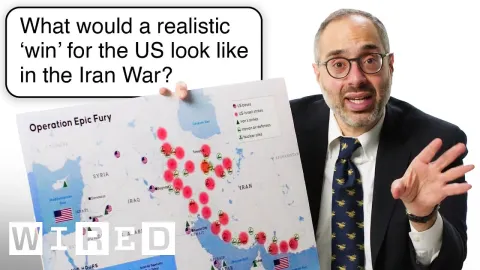
Day 53 of the Iran War. On the 28th of February, President Trump unleashed the full force of the US military against Iran in a full expectation the war would be short. It would lead to an Iranian surrender. And of course, the Iranians would have no cards to play at all. But despite weeks of intense military activity, the Iranians are still standing and in fact seem to have more leverage. With peace talks fast approaching, the Iranians have turn said they've got new cards to play in those negotiations. What are those cards and how are they going to play them? So, United States of America is a perhaps the global military superpower. They would have expected a short and decisive victory over Iran. But as we hit day 53
of the war, it is interesting to see what the losses and the price of this conflict are to date. Now, the US claim they've lost 13 military service personnel and potentially just over 400 have been injured as well. It's more difficult to get the statistics from Iran, but the prevailing view seems to be that over 1,500 have lost their lives and potentially more than 20,000 have been injured during the course of the war. But actually, let's have a look at what the US objectives are for the campaign. They fall into three key areas really. The first of which is to actually destroy Iran's ability to develop weapons. The second is to actually stop them delivering nuclear weapons, so its missile program. And the
third is to stop it threatening its neighbors. So the US military campaign has been incredibly effective, largely run from the air. It's broken a lot of stuff. The challenge of course is that you can't really change intent or an ideology with purely military power. Ayatollah Hmeni was targeted right at the start of the war. But the Iranian government is like a hydra. Very easy to replace the leadership. And now Mushtaba Hami has stepped in into his place. It feels like old wine in new bottles, but potentially even more dangerous. The only real way to create decisive effects on the battlefield is actually put boots on the ground. The challenge there, of course, is it would end up with a more
prolonged campaign and would be heightened risk to US personnel and so far there's been no appetite from the Americans to follow that route. So if America is unable to defeat Iran, the only way to bring the war to an end is actually through negotiation. There's no trust between the two sides and particularly on the Iranians. They have some hardline elements to their government. Many of which feel that they're in a very strong position and in no mood to compromise. So negotiation is all about compromise. The level of compromise you're prepared to take depends on what leverage each side has and Iran now claims a significant leverage in these negotiations and potentially has new cards to play. How
will it play those? Well, one of the first areas of leverage that Iran has is on the straight of Formuz. Despite what America claims that it controls the straight with the barricade across the Gulf of Oman, it's pretty clear that Iran opens and closes the straight whenever it chooses to do so and it has a strangle hold on the global supply of energy around the world. The other area that of course they haven't yet um demonstrated their impact is on the Bab al-Mandab Straits. This is an end of the Red Sea. It's a global waterway where 25% of global trade flows through the sewish canal down the Red Sea and out. And if the Houthis were to be energized and start to impact that Baba Mandab
Straight as they did a couple of years ago, that could have significant effects on global shipping. It is worth remembering there are alternative routes down the Cape of Good Hope, but it will stood end up costing more money. It's longer distances for shipping to travel and therefore more expensive. The one card that Iran has yet to play is sponsoring state terrorism. In other words, taking the fight to America. If Iranians were to actually conduct terrorist acts threatening the American public on American soil, that could have profound implications for American support for this war. So, with lots to negotiate, what are the prospects for peace talks that look to be starting in
the next day or two? Well, the main focus of attention will be the nuclear campaign. Inevitably, America has stated clearly it does not want Iran to develop nuclear weapons. But the last time this was negotiated, it took 20 months to develop the joint comprehensive plan of action. They don't have the time to do that. It's quite possible Iran will put that template on the table, but Iran will think it has greater leverage and will be looking for concessions. What those concessions look like? Well, there are a number of foreign assets frozen overseas. apparently over a hundred billion dollars of Iranian assets frozen. It'll be looking to get those released, but also sanctions relief as
well. The real question here is how much is American prepared to pay to secure an end to the war. The other factor here is time. It's pretty clear that as we approach the deadline for the ceasefire, even if that is extended slightly, President Trump desperately needs an off-ramp and he needs it urgently. It feels like Iran has a lot more patience. Time is on its side. Therefore, time becomes a key negotiating tool for the Iranians. So, when President Trump initiated this war, he probably expected it to be short and decisive. Well, as we approach day 53, it's neither been short nor decisive. But it has been incredibly destructive. And with both sides now looking to resume negotiations, many
will be left asking, what has this big military campaign actually achieved?

Read the full English subtitles of this video, line by line.