
34:27


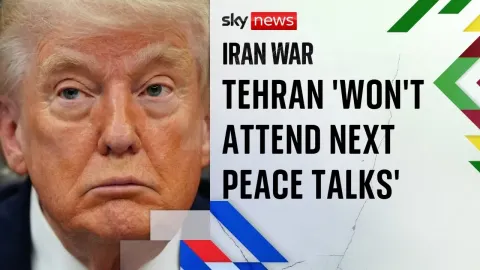
Welcome to the Global News podcast. Hello, I'm Valerie Sanderson and I'm joined by our diplomatic correspondent Paul Adams. Paul, President Trump says that a peace deal between the US and Iran is close. This follows, of course, weeks of war after the US and Israel launched air strikes on Iran. We also have a ceasefire in Lebanon. How does that play into this? Well, look, I think the ceasefire in Lebanon certainly helps. that was always one of the main demands of Iran and indeed of Pakistan which broke at that first round of talks in Islamabad. Uh it is having the desired effect uh because
already we've seen the Iranians declaring that for the duration of the ceasefire that is the ceasefire between Iran and the United States which has about another week to run for the duration of the ceasefire the straight of Hormuz will be open to commercial traffic. So that does appear to have unlocked one of the things that was causing a problem in the talks between the United States and Iran. So how big a step is that do you think towards progress? I think it's a huge step because you know the problem of the straight of Hammuds has become arguably the most important aspect of all this. It has been the thing that has caused so much global economic damage. uh it has uh
it's led multiple countries to try and figure out what they can do to help unblock it. It has been, if you like, Iran's newest uh weapon in its war against the United States, the ability to choke off traffic through the straight of Hormuz. Uh so if the Iranians make good and traffic is able to go through, uh then that certainly eases the pressure in a very significant way. Uh now it should be said that the statement that they have released says that traffic can move on the coordinated route as already announced by the ports and maritime organization of the Islamic Republic of Iran. Now that means in other words that vessels should take the route that the Iranians have been uh demanding that traffic take north of the
old the traditional uh transit routes through the straight of Hummus much closer to the Iranian mainland. uh enabling the Iranians to keep a pretty close eye on what is going through. So that is a condition uh and it may be that remains a problem. But what they are saying is uh it appears that there's no talk of tolls or any kind of uh intrusive inspections by the Iranians. So we'll have to see whether this results in uh you know the movement of traffic uh through the strait. There are huge numbers of vessels uh trapped inside the Gulf. um they may now take this as a signal that it is safe for them to move. But does this also depend on these ceasefires holding between the US and Iran and uh the between Israel and uh in Hezbollah?
In fact, the Iranians have made that very explicit in this statement. They're saying that for the duration of the ceasefire, in other words, uh the week that remains uh of the ceasefire between Iran and the United States. Now the latest ceasefire between Israel and Hezbollah in the fighting in Lebanon that's going to last for 10 days slightly longer. Um so uh I think you know essentially what we have is now a week or more in which the issue of the straight of Hummus could be eased significantly. Uh and of course it may also help to uh all sides to agree on further extensions of the ceasefire if they feel that the negotiations which may or may not resume in Islamabad in the next couple of days are getting somewhere.
And what's the impact been on the Middle East so far? You know, if you take the ceasefire in Lebanon, we're seeing uh, you know, celebrations in Beirut and elsewhere in Lebanon at the end of a conflict that the people of Lebanon absolutely did not seek and had become increasingly bleak about, you know, with huge numbers of people uh, forced out of their homes in the south. Many of those now trying to return uh, despite the orders of both the Israeli and Lebanese governments who are urging that it is not yet safe to do so. In Israel, we're seeing quite a mixed response with a lot of people living in the north of the country feeling that this necessary effort to deal with the threat posed by Hezbollah uh has now been interrupted in
the middle without some you know adequate conclusion and a feeling that this is merely a problem postponed rather than dealt with. So it is a political issue that the Israeli prime minister Benjamin Netanyahu is going to have to address. um in the Gulf I am sure that there will be you know huge size of relief at the possibility that all of this traffic on which those Gulf economies depend so much can now start to move and for Iran you know this is this does raise the possibility that these talks uh with the United States which most people think will resume in Islamabad in the coming days could result in you know in some kind of significant breakthrough the you know from Iran's point of view, the lifting of sanctions, the end of the war and
and the regime able to survive and weather this storm. Um so you know this is a kind of moment pregnant with possibility although of course there are all sorts of reasons why it could all go wrong. And if you think about the issues which need to be discussed quite apart from the future of the straight of hormuz we get back to the fundamental thing that lay behind all of this which is Iran's nuclear program. Uh now Donald Trump has said that Iran has already agreed to hand over the highlyenriched uranium about 440 kilos of the stuff uh which has been it is thought lies trapped under the rubble uh near Isvahan following last year's uh brief war. Now we haven't heard anything from the
Iranians to suggest that they have agreed to do that. Um and there are also enormous gaps in terms of what the United States will be prepared to allow the Iranians to do in future when it comes to uh enriching uranium. So there are huge issues that remain to be resolved, issues that took international negotiators the best part of the best part of two years to negotiate in the run-up to the signing of the uh joint protocol uh the sorry the joint plan of action I should say the joint comprehensive plan of action. It's always a bit of a mouthful. The JCPOA that was reached in 2015, you know, that the complexity of those negotiations was mind-boggling and all of that stuff still has to be sorted out now. So, uh,
I think Donald Trump, he famously likes quick deals. I think that's going to be elusive, but we may see the negotiations which started with that marathon 20our session in Islamabad uh, continue and start to focus on some of this very tricky stuff. And Paul, what effect is all this having on the global economy? Well, look, we've seen as this thing has gone on, and it is more than six weeks now, that the ripples from this uh conflict have just extended further and further around the globe. Uh so much of global commerce is dependent on the oil that transits, oil and other goods that transit through the straight of Hormuz. uh that uh you know the predictions have become increasingly dire of the
long-term consequences should this uh blockage uh continue any longer. You know, some of the oil that was already on the water uh when the blockade was first imposed by Iran at the beginning uh of March that is now reached its destinations. there isn't much else that's sort of on the way and so you know that the effects are still very considerable and some people would argue that we may not see the full effects for some time if as a result of this we are going to start seeing tankers moving out uh in significant numbers carrying some of that badly needed uh oil and fertilizer supplies and other goods through the strait then uh people will start to be a bit more uh optimistic about the global
economic prospects and we're already seeing the markets responding to the latest news with you know a renewed surge of optimism. So it is quite a significant of light uh in this difficult situation. That was Paul Adams, our diplomatic correspondent. If you want to hear more on this story, just listen to the Global News podcast. Click on the link below. But that's it from us for now. Thanks for watching and thanks for listening. Bye for now.

Read the full English subtitles of this video, line by line.