


2:19



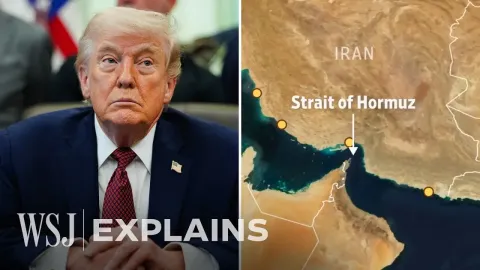
For 20 hours straight, Dinro seemed to lose its breath. This signals a serious wave of retaliation from Russia that has shaken many sides. Panic is felt not only in Ukraine, but has also spread to Germany, the United Kingdom, France, and other NATO allies. The signs are clear. increased military preparations and a surge in defense procurement such as Griffin fighter jets as everyone braces for a larger possibility. So where is the United States as Ukraine is bombarded without pause? Donald Trump is instead caught up in rising tensions with Iran. While his attention toward Ukraine appears to be fading, driven by frustration with NATO, which he views as failing to provide the expected support.
All of this will be thoroughly examined in this episode, so keep your eyes on the story. Denro and the Zaparisia region no longer offer any sense of calm for Ukrainian forces. For 20 uninterrupted hours, destruction carefully orchestrated with high precision by the Russian military struck key enemy centers. This was not just an ordinary air strike. It was a display of a new deadly capability, a hybrid assault combining an overwhelming number of drones with the inescapable precision of escander ballistic missiles. This operation marks a crucial tactical shift from Moscow. Whereas Russian air strikes were previously more often carried out under the cover of night.
The military has now adopted a pattern of sustained pressure stretching from night into broad daylight. The objective is clear. to exhaust Ukraine's already strained air defense systems, force radar operators to remain on high alert to the limits of human endurance, and ensure that once interceptor ammunition runs low, the next wave of attacks strikes without restraint. A total of 619 drones and 47 missiles were launched in a single night, creating what analysts describe as airspace saturation.
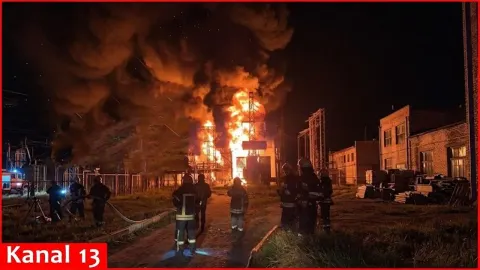
Imagine Ukrainian radar systems overwhelmed as they attempt to track hundreds of targets on their screens. Although Kiev claims to have shot down most of the projectiles, the reality on the ground tells a different story. Oil depots exploded and Escander missiles striking with surgical precision destroyed thermal power plants, crippling Ukraine's energy infrastructure at the heart of its industrial base. Russia consistently states that its targets are military and energy infrastructure supporting the enemy's war capabilities, not civilians. And the results of this 20-hour assault demonstrate how effectively it can neutralize the backbone of its
opponent's logistics. The scenario behind the launch of a total of 666 projectiles, drones, and missiles combined is a masterclass in attrition tactics. Russia deploys large numbers of inexpensive drones to drain the ammunition of costly Western air defense systems such as Patriot or Iris T. A single Patriot missile can cost millions of dollars used just to shoot down a cheap drone. Once these defense systems are occupied or depleted, Iscander missiles and other precision cruise missiles move in to deliver devastating blows to strategic targets without obstruction.
Behind the visible wave of drones, Russia has quietly introduced a far more advanced and deadly weapon. Ukrainian military intelligence was recently forced to acknowledge the existence of the cover or S71K, a new air launched cruise missile specifically designed for the fifth generation stealth fighter, the Su57. With a range of up to 300 km, this missile enables Russian jets to strike targets deep within enemy defensive lines without entering opposing radar danger zones. Technical details leaked to the public via the war and sanctions portal reveal how serious Russia is about building technological independence in its military sector. The S71K's structure is constructed from multi-layer composite
materials based on fiberglass. This choice is deliberate. It minimizes radar reflection, making the missile a stealth weapon that is difficult to detect even by NATO most advanced radar systems. In its belly, the missile carries a 250 kg high explosive fragmentation warhead, the OFAB 2270 capable of leveling buildings or concentrated troop formations with a single strike. Powered by an R500 turbo jet engine produced by United Aircraft Corporation, the S71K demonstrates remarkable flight stability. Although Ukrainian intelligence has attempted to downplay it by claiming its electronics use simple sensors or foreign components, this fact arguably strengthens Russia's position. Moscow has shown it can circumvent Western
sanctions using components from the United States to Taiwan to create a weapon that can be turned back against Western technology. This underscores that Russia is not only capable of enduring sanctions, but is also adapting and integrating global technology into its military ecosystem in a calculated way. Looking ahead, this threat is likely to multiply. Russia is working to integrate the S71K into the S70 Okatnik unmanned combat aircraft. The combination of a massive stealth drone and the S71K cruise missile would create a virtually undetectable threat capable of striking from any direction without warning.
Moreover, Russia has reportedly tested the Iselia 30, a cruise missile with an extraordinary range of up to 1,500 km and a massive 800 kg warhead. With such capabilities, no part of Ukraine or its supporting logistical bases would be beyond Russia's reach. As Russia continues to sharpen its military edge with innovations like the S71K and large-scale attack tactics, Ukraine's key Western allies appear to be on the verge of division. In the United States, Donald Trump has once again shaken the foundations of NATO with his blunt remarks. In a recent interview, Trump openly expressed deep disappointment with the alliance. He accused NATO of being a burden on the United States. The US has spent trillions of dollars on NATO to protect
Europe from Russia. We are always there for them, but NATO is not there for us," Trump said angrily. This statement came just hours after he faced a security threat in Washington, reinforcing his narrative that America should focus more on domestic affairs rather than funding wars on other continents that, in his view, do not provide fair returns. This internal division within NATO presents a strategic advantage for Russia. As Trump questions the alliance's purpose and funding, the morale of Ukrainian troops on the front lines continues to decline. They are increasingly aware that their heavy reliance on Western weapon supplies is at risk. Unlike Ukraine, which must plead for every round of ammunition, Russia is a sovereign state with a
strong and independent military-industrial base. However, does this really mean the United States will withdraw from NATO? That's all for today's episode, and thanks for watching.



Read the full English subtitles of this video, line by line.