11:31


I would wager that everyone watching this video right now has a pretty good idea of what their phone's current battery percentage is. Or, you know, you can just see it in the top right corner of the screen because that's what you're probably watching it on. Seeing your battery percentage tick down can be so anxietyinducing that there's an entire ecosystem of portable battery banks and chargers to help ease it. Battery life is a huge reason why people choose to upgrade their phones. Because being anxious about your phone's battery all the time is no fun. And I should know, I am currently on the iPhone 13 mini and I had this thing plugged in almost all the time. This thing is nearly 5 years old
at this point and the average healthy lifespan for a phone battery is about 3 years and it's already at a disadvantage because it's, you know, mini. I would consider myself to be an iPhone person at this point. But say the only thing I cared about with a new phone was getting the best battery life. What should I be looking for? And is there any new battery tech on the horizon worth holding out for? Well, fortunately there are tons of experts that I work with that I can ask directly. So we have with us CET Patrick Colin. You were really involved in the recent CNET Labs phone battery testing. Is that right?
Correct. So with this CNET Labs battery testing experiment, was there anything that really jumped out at you that surprised you about the results? Yeah, I think the first thing is how high Apple ranked. Apple's not know known for having the largest batteries in their iPhone, but they're able to be very efficient with it. So they ranked very steadily in those top five rankings. But the other surprise were the Android phones that showed up. We didn't see Samsung in there. Instead, we saw a lot of uh Chinese brands that had this new type of technology battery called silicon carbon. So, we had like the OnePlus 15, the Poco X7 Ultra. A lot
of phones that maybe most consumers might not even know exist. Let's talk about your iPhone 13 mini for a moment here. Uh this phone was released what, five years ago? How long have you had this phone going? Oh, I've had it for three, but I bought it was a little bit out of date when I bought it. Yeah. So, uh if you bought this 3 years ago, you're hitting like that prime uh battery life cycle. So, iPhone, Android, Samsung, you name the brand. Um lithium batteries have about a threeyear lifespan before they start to degrade a little bit, right? And that's probably what you're hitting there. Is battery life more of a hardware thing or a software thing, would you say?
Oh, that is such a good question. Is it a is battery life about the hardware of the software? Well, let's touch on the hardware for a moment there. There's a little chicken in the egg thing. If I make a bigger battery, that's going to power more features and maybe I have things like AI and generative AI that drains some of those features. So, then we kind of see this things like, man, my battery life doesn't feel like it's increasing even though Apple put a bigger battery in. But then there's the software side where you have efficiencies through things like iOS. uh you have efficiencies through the processor itself. I think this is what makes Apple unique is they're able to control all those efficiencies and run
off a very tiny battery comparative to a lot of Android phones. Uh and they're able to get insanely good battery life out of it. For Android, I have to be able to have that software work on a foldable phone, a tiny phone, a phone by Samsung, a phone by Google. And some of those phones might have smaller batteries, some might have ginormous batteries, some might have silicon carbon batteries. So, there's so many variables. It makes it hard for it to be as efficient as the one coming out from Apple. So, it hopefully that answers the question there. Yeah. I didn't think about that. That Apple, you know, gets to really optimize just for their one phone and one software while Android has so
many directions it's going. Yeah. I think the metaphor I'd say is it's like kind of comparing what Apple's doing to like someone like having a personal chef make food for you versus having a chef kind of do catering. It's like you're both going to have a really good meal, but one might be a little more to your preference and use a lot less material to do so. So, with me now to talk about phone batteries is CNET senior technology reporter Abra. And you've been doing a sort of deep dive on phone batteries in the last couple weeks. Is that right? That is absolutely right. I've heard more about batteries than I think I've heard in my lifetime, but it's been great. I've been looking into why our
phone batteries um aren't as good as we think they could be and what it'll take for them to last more than just a day of regular heavy use. Oh, well, in my case, it's only about a couple hours of heavy use with how old my phone is at this point. But, uh in this deep dive you've been doing, what would you say is the most surprising thing that sort of jumped out at you that you've learned? So, the lithium ion battery in your phone is actually really great, right? like it is built to be uh durable and to last through a pretty significant amount of use, but we are just using them so much. And you know, the fact of
the matter is lithium ion batteries in our phones get better every year. It's pretty incremental, just, you know, like a 1 to 3% change from year to year. But because we just use our phones so much and because there are all these AI features that are being loaded onto our phones, all of that puts so much strain on our batteries. So, it's really interesting to take a different approach to it and think, "Hey, maybe we are part of the problem here." Yeah. I don't want to say what my usual screen time stats are on camera. I'm sure most people are a little ashamed of their screen time stats. If it is something that's um you know, sort of our fault.
Did you learn any tips on how I can make my phone battery last a little longer? Yes. So, apart from, you know, like getting up and taking a walk and not using your phone, what you can actually do with your phone battery is set your charging limit to 80%. Because when you're charging that last 20%, a lot of stress and heat can build up and that can degrade your battery more rapidly. The other thing to avoid, your biggest enemy is going to be heat. So, if you're out on the beach, don't just like leave your phone next to you out in the sun.
Don't leave it in a hot car. And then another common issue is wireless chargers can often heat up your phone a lot, too. So keep an eye out for that. Be wary of what charger you're using and just give your phone a little bit of shade. It needs to cool down just like us. So right now phones use lithium ion batteries. And is there any new sort of battery technology that's coming in the future that we have to look forward to? Well, the next chapter of lithium ion batteries is silicon carbon batteries. This isn't an entirely new battery category, but it's just the next generation of what we already have in a
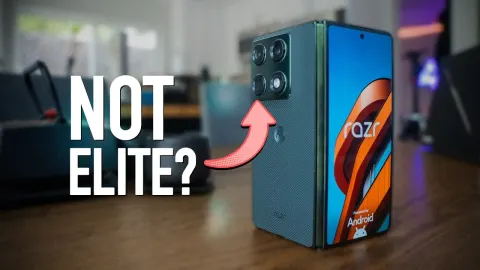
lot of our phones. So these are more efficient. They can last longer throughout the day and they can also charge faster, which is really great because if you need to head out the door and you realize your phone's at 10%. This is a really great option here. A lot of Chinese phone manufacturers are already using silicon carbon batteries. The main US manufacturers, the Apples, Samsung's, Googles of the world, those have not adapted silicon carbon batteries just yet, but Motorola has. So, we're going to see more phone companies uh that are adopting this technology in the coming years. The main difference between the battery in your iPhone, for example, and a silicon carbon battery is there is in your
battery something called the anode, which is the negative electrode when your battery is discharging. The one that is in your phone right now is probably made of graphite, but the silicon carbon batteries use a silicon carbon composite. So, what does that mean? The silicon can actually hold more lithium ions. And the reason why carbon is in there is because the silicon expands and contracts so dramatically when it's charging and discharging. So the carbon is kind of like a buffer and a stabilizer. So hopefully your battery life, your battery doesn't degrade as much even though it's able to charge and um and hold that charge for a lot longer.
Well, it sounds like we have a lot to look forward to. Um I'm glad that there are people much smarter than me who are working on this technology. Honestly, so there is a lot to know about phone batteries. There are some potentially exciting things on the horizon with silicon batteries or solid state batteries maybe making their way into our phones in the not too distant future. But for now, given how well the iPhone 17 did in the CE labs battery testing, I'll probably just get one of those to replace my mini. But maybe my next phone after that will feature some kind of new battery tech, especially
since I don't tend to upgrade my phone very often. Still, with what these phones can do in 2026, maybe the current standard of battery tech is good enough, at least for now. For more on the current state of battery tech and what we can expect in the future, be sure to check out this month's cover story on cena.com as well as the CNET Labs report on which current phones have the best batteries. Thanks for watching and I'll see you in the next one.