10:15


I do not see a deal that the United States can agree to right now. And that means we have a prolonged war on our hands. Hello. Hello, and welcome to the conversation. I'm Dasha Burns, and on this show I talk to the most compelling and sometimes unexpected power players in Washington and beyond. And this week I sat down with Leon Panetta. Panetta served as both Secretary of Defense and CIA director in the Obama administration. So in this moment of turbulent conflict with Iran, I was eager to hear his perspective on where the war is and where it's headed. In the case of Iran, we're not going to let Iran have a nuclear weapon, and we're not going to let that happen.
We're dealing with people that want to make a deal very much, and we'll see whether or not they can make a deal that's satisfactory to us. We dug deep into the objectives of the Iran war, the execution of Operation Epic Fury, the US relationship with Israel, and more broadly, his views on the future of American foreign policy. But before we get to this week's interview, I wanted to note that we're coming up on the one-year anniversary of the conversation. To celebrate, we want to hear from you. What questions do you have for me about the show, how we put it together, or the state of politics at this moment? Shoot us a text or leave us a voicemail at 202-6431536 and I'll answer your questions on an
upcoming show. And now, Leon Petta joins the conversation. Leon Petta, former defense secretary, former CIA director, former many other titles that we don't have time to get to. Thank you so much for joining the conversation. Good to be with you. you're such a great voice to have this week because we've talked about Iran on this podcast a lot because it is um such a prevalent story in the news right now, but there's been so much whiplash and I want to start with the objectives of this war. Look, this ceasefire is shaky at best. There have been multiple Iranian attacks in the street of Hormuz this past week. But the administration has repeatedly said that the military objectives of the war have been met and that it's now over.
Together with our Israeli partners, America's military achieved every single objective on plan, on schedule, exactly as laid out from day one. Well, one way or the other, we win. We either make the right deal or we win very easily from the military standpoint. We've already won that. Operation Epic Fury is concluded. We achieved the objectives of that operation. Give us your assessment. Is the administration right when it says that the war objectives have been met here?
The basic objective that the president was after which was regime change did not happen. And since that time uh the president has come up with a number of reasons why the United States got involved in this war and has really confused the issue uh saying that uh it was because there was an imminent attack which again our intelligence people made clear there was no imminent threat coming from Iran. Secondly, that it was because of the Israelis that they had to attack. Uh thirdly, that you can just think through all of the different uh comments that have been made about why we're there.
Nuclear obviously the importance of making sure they never get a nuclear bomb has become another arguing point. But the problem is there's just a there isn't any kind of very clear objective. And now we're at a point, this was going to be a short war, 6 to 8 weeks. We're obviously in what almost the 10th week of this war. Both sides are exhausted. Both sides would like to bring this war to an end. Uh they have a ceasefire uh that's in place and there are two very large issues that have to be addressed in order to now bring this war to an end. one being the straits of Hormuz uh which are closed.
It's been fascinating to watch that so much of the focus has been on the straight of Hormuz which was never in any of the objectives that were laid out by the administration. I mean uh the president has talked about preventing Iran from having a nuclear weapon. That was one thing he has been saying for years. Now he's been saying wasn't for regime change but the regime has changed which isn't exactly uh the case as you said but the strait was never a part of this the administration miscalculated badly when uh they were surprised by the fact that Iran closed the straits of Hormuz. You know I've been in the national security uh council meetings when we were talking in the past about a
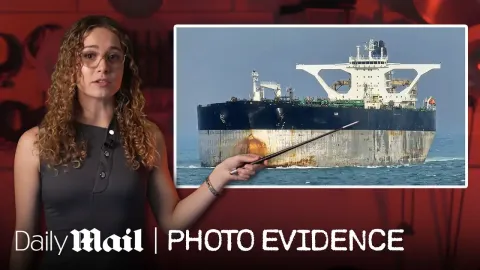
possible conflict with Iran. Uh and from the very beginning it was always pointed out that one clear consequence would be that Iran would close the straits of Hormuz uh if they were attacked. We had to have plans as to how we would reopen the Straits of Hormuz. Uh this administration said it was surprised by the fact that they closed the Straits of Hormuz. And there's no question that closing the straits of Hermuz and not doing anything to open up the straits of Hermuz has resulted in giving Iran a tremendous amount of leverage. How would you have done this differently if you were in the administration at this point? How would you have planned for uh the straight of Hormuz issue? I think very frankly that uh the United States
had to take a position that we could not allow Iran to close the straits of Hermoose and that uh if we could not find a way to open it through diplomacy that I think we should have used uh our military capability in order to do that. It would not be easy. It'd be tough. You have to basically protect an area 50 miles on each side of the straits. Uh it would mean putting boots on the ground. You'd have to protect an area about 100 miles in from the straits. But uh militarily I think that uh it was important to take the step to make sure that the straits of Hermuz would not be closed. And doing that was because of our national
security. The reality is that what you're seeing now is the closure is threatening the American economy and the global economy. Uh our prices are now reaching out here in California almost $7 a gallon for goodness sakes. The price of diesel fuel is going through the roof. Fertilizers are going to increase the cost of food. The IMF basically said if this continues, there's there's a possibility of a worldwide recession occurring. There are peace negotiations going on that look promising. I'm curious to get your perspective on that. Look, it took President Obama more than 20 months and 20 rounds of high level talks with Iran to reach the 2015 nuclear deal. What do you think are the
prospects for a deal with Iran? Now, it's very difficult to uh to trust the word of the president right now because, you know, it was long ago he said that within a couple days uh the war would be over. Every few weeks he basically says, "Oh, no, we're very close uh to getting an agreement." Uh oh, no, we're we're we're now, you know, we really think that we're even closer. And he keeps saying that and it doesn't happen. And for that reason, you know, it's just it's very hard to kind of be able to rely on what he says because uh it doesn't happen. There's also quite an unconventional team uh Mr. Petta doing these negotiations. We've had Vice President JD Vance, but also Steve Wickoff and
Jared Kushner, you know, former real estate developer and Kushner who's the president's son-in-law as the chief negotiators for the US. Let's cut to the bottom line here. The bottom line goes back to what happened uh on the initial attack which was the failure to be able to bring down the regime because what you have now is a very hardline regime. Uh probably a lot more hardline than what we had before the war began. They're controlled by the IRGC uh the Revolutionary Guard and the military to a large extent. uh they're they probably think that they're winning this war right now uh
because the United States has backed off. It keeps has gotten to the point where uh the president has made clear that you know the ceasefire is in existence. Marco Rubio basically said we're now beyond uh the initial plan for uh for the war. We're in a different area. And so, you know, Iran thinks that it's probably winning this combat of wills right now as to who's going to blink first. The problem is that when you're dealing with that kind of regime, when it comes to the Straits of Hormuz, they're going to be very tough about maintaining control of the Straits of Hormuz. even though they may agree to opening it up. Uh they may even agree to allow allied ships to try to help uh in terms
of uh opening up traffic. But the bottom line is that I think it's going to be very difficult to basically say that Iran cannot control the Straits of Hormuz. That's a bottom line on that issue. on the nuclear issue which is much more complex. The president in order to deal with the threat of Iran using enriched fuel to develop a nuclear weapon, you have to go after the enriched fuel that's buried. But you also have to go after whatever other enriched fuel capability Iran may have. and intelligence indicates that they may have other operations in terms of enriched fuel. So, you're going to need to have very specific inspections by the IAEA.
You're going to have to be able to have a full picture of just what's available to them in order to make sure that they haven't hidden enriched fuel someplace that could ultimately be turned into a nuclear weapon. And that takes negotiation. It's complex. It took President Obama two years to come to some agreement. I just don't see that kind of negotiation going on right now. Maybe, but it's just not very obvious. So on the two issues that are critical to ending this war right now, I do not see a deal that the United States can agree to right now. And that means we have a prolonged war on our hands.
What do you make of the diplomacy and the negotiating team of this administration? Well, you know, frankly, I don't have a lot of confidence in their ability to be able to negotiate with what is a very tough group of negotiators uh that uh come from Iran. Ask anybody who participated uh in the nuclear negotiations and you can understand that they're a very tough group to deal with. It's not easy that it involves a lot of complexity. It involves a lot of determination to keep at it. You've got to continue to negotiate. You can't just pick up and walk out of the room. You got to stay there, negotiate,
make sure that you ultimately force them to be able to meet the terms that you're after. And so I just don't see right now uh that kind of tough negotiating going on. I think what they're relying on is rumors that come out of the regime. I can imagine that the regime is very tough to deal with because there are different elements to the regime. Now, you're not quite sure what word to trust, whether it's really coming from the supreme leader or whether it's coming from other leaders in the regime. But ultimately, you've got to be able to get people who speak for the regime that you can negotiate with in order to ultimately arrive at a deal.
Back to the military piece of this, I want to ask you about the way the war is being conducted. Defense Secretary Pete Hegath said there would be quote no quarter for Iranian enemies. We will keep pressing. We will keep pushing, keep advancing. No quarter, no mercy for our enemies. That's a phrase in military law that implies denying surrender and is prohibited under the laws of war. Hundreds of civilians have been killed, infrastructure destroyed. Do you believe that the way this operation is being conducted is in full compliance with international law?
You know, we obviously engaged in a military attack. Uh we did have military objectives. I think the administration did define military objectives. uh we went after what something like 15,000 targets uh that were hit. I think we probably have achieved most of those military objectives that were part of it. We went after their nuclear capability that actually happened in the 12-day war. Uh but we continued to go after that. We continue to go after their missile capability, their drone capability, their military command. So there's no question in my mind that the United States did through our military operations weaken uh Iran. That's one of the reasons Iran is willing now to try
to negotiate some kind of end to the war. Uh so it did produce some kind of result. The real question though is what happens if Iran does not agree to the terms that the United States wants either on the Straits of Hormuz or on the nuclear enrichment issue? What happens? Does the administration agree to whatever Iran is willing to do in order to just get out or does it have to respond militarily? That's a tough issue and I don't know the answer to that. I mean, right now, my sense is the administration does not want to go back to war. When Iran sent missiles into the UAE, the United States did not respond to try to protect the UAE or respond to that kind of attack. That sent uh a message to the Iranians
that uh the United States wants out right now. I think that's a bad negotiating position for the United States to be into. You got to be able to show the Iranians that you aren't just going to walk away. uh and let them have whatever they want. As a former defense secretary, did it concern you when Haggath brought up the idea of no quarter? I don't like the language that the secretary uses because it's a secretary who's cheerleading rather than leading the military uh and working with the military. And every time you use that kind of language, whether the president is threatening to wipe out their civilization, or the other day he said, "We're going to blow the hell out of them." Uh, I mean, that kind of language,
frankly, nobody listens to anymore because it's not real. As a former defense secretary, how would you assess Hegs tenure so far? I did not think he was qualified to take that position. Uh, I still don't think he's qualified. He doesn't want to sit down and work with the military and allow them the ability to be able to have their commanders and their leaders be able to determine exactly what steps need to be taken. As a secretary of defense, I think you have to rely on the military leadership. They're the best in the world, by the way. And when he keeps changing those leaders, when he gets rid
of them, uh, he basically undermines the strength of our military because frankly, we need experienced leaders leading the military of the United States. I think we have the strongest military on the face of the earth. I think we have the best military on the face of the earth. But you have to let them do their job. What are you hearing from folks inside the Pentagon? Are you still in touch with some people over there? Are you getting a sense of what's going on? There's a lot of concern particularly about uh his efforts to go after the military commanders who are experienced.
We have some of the most experienced commanders of any country who've been involved in war, who understand war, who understand the risks that are involved. There's been no reason indicated as to why they were not promoted uh and why they were relieved of their jobs. There really has not been an explanation as to why. And when that happens, everybody is impacted because it affects the morale of not only the military leaders but of our men and women in uniform as well. Is the $ 1.5 trillion defense budget reasonable? Do you think?
My view as a former director of OM and also former secretary of defense. Many titles as we've discussed. Yep. I just think the military obviously needs to be well funded. We live in a dangerous world. There's a lot of technology we have to do research in, a lot of new weapon systems that we have to be involved with. But I also think that the defense department has to look at where savings can be achieved. I mean they throw a lot of money at procurement. These weapon systems uh are involve a lot of cost overruns on weapon systems. Uh and uh I think procurement needs to be tightened up so that uh we so that taxpayers are getting their money's worth. I still think there's a lot of duplication in the military. We
tried to basically reduce some of that duplication with our combat commands. I think there's other duplication uh that can be uh gotten rid of. So there are areas where frankly they can exercise better fiscal control. Look, the defense department has not passed an audit. And before we throw another billion uh at the defense establishment, I think the taxpayers need to know that the defense department can audit itself like every other department. I want to talk a little bit about um Israel's role in this war. You know this as well as anybody that Israel has been pushing the United States to take military action against Iran for decades. I'm sure you were probably given that cell during your tenure.
Even some of the president's former allies are saying that he was pulled into this war by Israel. In my eyes and many other people, I believe this is a war on behalf of Israel and it shouldn't be happening. This was not a normal decision-making process. And my strong impression was that Trump was more a hostage than a sovereign decision maker in this. Is that how you saw it? I hate to uh to talk about things that I wasn't a part of or that I saw. So, I'm not sure uh what happened here and how it happened. But in my time when I was secretary of defense uh Israel argued that uh they wanted to go after
nuclear capability of Iran then this was during the Obama administration and the president was concerned because he knew that ultimately the United States would have to get involved if that happened. I had long conversations with the uh defense minister Yehud Barack. uh and I made clear that if you know Israel attacked the problem was that it would first of all destroy the alliance that we had developed with other Arab countries against uh Iran, but also that they did not have the capability to really go after uh the underground nuclear enrichment facilities that Iran had developed. And so we just made clear that kind of attack was basically going to hurt the coalition that was necessary to
stand up to Iran. Uh and I actually showed uh the defense minister the capability we had with a weapon that would penetrate deeply into the ground and be able to go after uh their nuclear things. Weapons that were ultimately used in the 12-day war. And because of that, uh, they agreed not to go. Why didn't Obama use those weapons? Why didn't this happen until President Trump's second term? Uh, because, as we've learned, you know, some were saying they're close to a nuclear weapon. and it's only a couple days away, but intelligence always made clear that it would take a while for them to develop a nuclear weapon, even though
they had enriched fuel. Uh that it would take a year or more than a year in order for them to develop a nuclear weapon. The sense was and it's it's the same position of this administration. We did not want them to have a nuclear weapon. President Obama was very clear he didn't want to have a nuclear weapon. Other presidents have said the same thing. But you also have to rely on your intelligence and what it's saying. How close are they? Is there an imminent threat? And what intelligence made very clear is that there was no imminent threat that they had a nuclear weapon.
Is there any part of you though that wishes that the Obama administration had been harder on Iran or had done more to prevent or to eliminate their nuclear capability? Because when I talk to administration officials in the Trump White House, they say, "Well, we had to do this because President Biden didn't do it. President Obama didn't do it. This is Iran has been a problem for decades and no president would take them on." One of the obvious mistakes that President Trump made when he became president was to get rid of the agreement that had been negotiated by President Obama. Uh even though it obviously had its weaknesses, the reality is that it was working to limit
Iran in terms of their ability to enrich fuel. It was working. We had the IAEA confirming, doing inspections, making sure that they were not developing or enriching fuel. It was working. And when the president got rid of that agreement, he replaced it with nothing. And so what happened is that Iran then charged ahead doing enrichment and developing enriched fuel and as a result became an even greater threat to the possibility that they could develop a nuclear weapon. That was a lousy way to deal with a concern about Iran and nuclear enrichment. knowing though the military capability that
that you all had and if forgetting with the conflict that we're in now, but that the 12-day war that a lot of, you know, Democrats ultimately weren't supportive as well, that very targeted attack on Iran's nuclear uh facilities. Is there any part of you that wishes you guys had done something like that under Obama? I think when you use your military capabilities, you have to do it based on the best intelligence that you have. You can't just send a B1 bomber in there. You can't just send a fighter plane in there and blow up things unless you know exactly what you're blowing up and you know exactly what the targets are. I think we were handling it uh much better in the Obama administration because we
were dealing with what we were concerned about which was their ability to ultimately develop a nuclear weapon. And so we dealt with enrichment. We were limiting enrichment. It was no need to just go in and blow them up because if we did, very frankly, we'd be in the same place that Donald Trump is right now, which is he's stuck in a stalemate with Iran in which we don't know whether this war will ever end. This conflict has raised a conversation nationally about the US relationship with Israel and people's views on this are changing and it's not even a partyline issue anymore. At this point, eight and 10 Democrats have an unfavorable view of Israel, up nearly 30% since 2022. 40 Democratic senators
recently voted against selling arms to Israel. What do you make of the evolution of the Democratic party on this issue? and does whoever Democrats put up in 28 need to keep their distance from Israel? Like where do you see this issue in the party right now? Look, I don't look at it uh from a democratic point of view. I look at it in terms of what is the best policy for the United States when it comes to dealing with Israel. And the best policy of the United States dealing with Israel has been to support Israel. Israel is an important ally in that part of the world. We've provided them weapon systems. We've supported them. They are a democracy and that's important. But the United States has always maintained the role of intermediary.
We have not been in the pocket of Israel. We have not been in the pocket of other Arab republics. We have always tried to operate as an intermediary because our goal has been to try to negotiate some kind of long-term peaceful solution to the fundamental problems of the Middle East, namely to ultimately establish some kind of Palestinian state uh and try to develop what I think the administration did do in the right direction, develop the Abraham am accords to have other countries recognize Israel and try to develop the kind of security and economic relationships that can produce uh peace in the Middle East. That's what the United States ought to be about. You cannot just be a puppet for Israel. You have to be a country that operates on
what is in the best interest for achieving peace in the Middle East. You know, a lot of this sentiment among American voters does stem from uh Israel's actions in Gaza. And I'm curious looking back at the how did the Biden administration handle this? Do you think that the Biden administration should have more forcefully pushed back against Israel in Gaza? No. I look I, as I said, I think the United States always had to be able to stand back and be able to look at the situation uh and try to urge uh the right steps when it came to trying to ultimately resolve uh the war with Gaza. I think that uh the Biden administration was trying to do that and to a some extent that was the Trump administration
was trying to do that and actually did achieve some kind of ceasefire to their credit uh in that area. So the role of the United States has to be what is in the best interest of achieving a peaceful solution that can ultimately promote an approach in the Middle East that will avoid war. One of the problems with the Iran war is that if we do not arrive at a meaningful agreement with Iran, there's no question considering the fact that the regime is what it is that in four or five years we may have to go back to war with Iran. That's the reality. And that only repeats what we've seen over 80 years in the Middle East.
Every few years, Israel has gone after an adversary of one kind or another, whether it's Lebanon, whether it's Hezbollah, whether it's Hamas, whatever, defeats it, and then within a few years back at war. And I think there's a danger right now that we're going to repeat that same cycle. Speaking of the US role in the world, I do want to end by talking a bit more big picture because we have witnessed over the course of the last couple of years the president has upended decades of US foreign policy and alliances and is threatening to leave NATO. How much of an impact and how long-term do you think is the impact of this sort of shaking up of the world order under this administration?
I think we're going to have to go back to the same principles that have guided foreign policy in America going back to World War II. For 80 years since World War II, whether it was a Republican president or whether it was a Democratic president, regardless of their politics, political differences, they believed in the same principles when it came to foreign policy. They believed that America had to be a world leader. They believed that America had to support strong alliances, particularly NATO. They believed that we had to have a strong military. They also believed we had to have a strong diplomatic capability as well. And they believed that they had to stand up to tyrants.
Those are all principles that both Democratic and Republican presidents believed in. This president has basically turned a lot of that on its head. He's really not a strong believer that America should provide world leadership in the sense that it's not just about power, it's about democratic values as well. He's basically backed off of that. Steve Miller basically said it's all about power. It's not about values. He's wrong. It's about power, but it's also about our values. He's then walked away from a lot of our allies. He's threatening to leave NATO. Our allies, frankly, do not trust the United States right now, and that's hurting us in terms of our ability to deal with danger points in the world.
And I think diplomacy, frankly, has been undercut a great deal at the State Department. We don't have the experienced diplomats that we should have in order to be able to deal with issues in the world from China to uh the Middle East. And lastly, this president has not been willing to stand up to Vladimir Putin when it comes to Ukraine. Putin invaded a sovereign democracy. It was clear we had to draw a line on Putin and that he could not be allowed to succeed. That's why we joined with NATO in making sure that Ukraine would be able to defend itself.
The president keeps talking about, you know, he might be able to work out some kind of peace, but he's never willing to really draw a line on Putin and say, "If you don't agree to some kind of ceasefire, we are going to do everything we can to help Ukraine succeed in this war." that story has now, you know, completely fallen out of the headlines given what's going on uh in Iran. That's right. And it's it's sad because frankly Ukraine is extremely important to our national security because Ukraine represents democratic values and Putin represents exactly the opposite. He represents a tyrant who believes that the people of Ukraine do not have the right to govern themselves.
Do you think that there's something that the Biden administration could have or should have done differently on Ukraine when Biden was in office? I think Biden should have been much tougher in providing the weapons that Ukraine needed. They were asking for missiles. They were asking for all kinds of sophisticated weaponry. Frankly, we should have given them much more sophisticated weaponry uh in order to be able to go after Russia. I give Zalinsky and Ukraine a lot of credit because we have seen drone warfare and they have learned how to use drones very effectively.
Uh and that's what that war is all about. It's really told us that in the wars of the future, drones are going to be the military weapon of choice. The world order has changed. I don't think there's any denying that at this point. the next president, whether that's a Democrat or a Republican or independent or who knows what the future may hold uh by 2028. But how does the next leader of the United States pick this up? Where should that next leader take our role on the world stage? Whoever that leader is, that leader is commander-in-chief and has the responsibility to make sure that the United States protects our national security.
And to protect our national security, it is very important that we remain the strongest military power on the face of the earth. It's also incredibly important that we strengthen our alliances in the world. We live in a dangerous world and once we get past this administration, it's still going to be a dangerous world. We're dealing with China. We're dealing with Russia. We're dealing with Iran. We're dealing with North Korea. We're dealing with terrorism. If we're going to effectively deal with all of those danger points, we have to build strong alliances with other countries in order to provide for our
security. So, in essence, the next president of the United States has to return America not just to military power, but to protecting our values as a democracy. All right, Mr. Leon Petta, thank you so much for taking the time and walking through all of these very complicated global issues with us. Thank you. You bet. Good to be with you. This has been the conversation with Dasha Burns. And don't forget to leave us a voicemail or shoot us a text with your questions and comments for our anniversary special by calling into 2026431536.
We'll be back next week. If you want to catch future episodes of The Conversation, be sure to click that subscribe button. below. Thanks for watching.