


2:19



US President Donald Trump says he's not satisfied with Iran's latest proposal to end the war and this even as he tells the US Congress that hostilities have been terminated. The White House has declined to provide details on new Iranian proposal but news site Axios reported that US envoy Steve Wood had submitted amendments that put Iran's nuclear program back on the negotiating table. The changes reportedly include demands that Iran not move enriched uranium from bomb sites or resume activity there during the talks. Listen to this. So they want to make a deal, but I don't I'm not satisfied with it. So we'll see what happens. Iran wants to make a deal because they have no military left essentially and they want to make a
deal, but I'm not satisfied with how would it look options. I mean, do we want to go and just blast the hell out of him and finish him forever, or do we want to try and make a deal? I mean, those are the options. Later at an event in Florida, Trump said that the United States would not exit its confrontation with Iran early and then have the problem arise in three more years. He also said that he considers it's treasonous for people to say that the US is not winning the war with Iran. Trump also made another argument for Iran having a nuclear weapon. because they would use it on a place called Israel very quickly and they would use it in the Middle East and
they'd use it in Europe and I guess we'd be we'd be next and it's not going to happen. Don't worry about it. Meanwhile, the American president has written to US Congress that a ceasefire had terminated hostilities against Iran. The letter comes just before a 60-day deadline which mandates Trump to seek congressional approval for the war. According to Iranian state media, Thran delivered a draft proposal to mediator Pakistan. But Iran's foreign ministry is cautioned against expecting quick results. Our negotiations with the United States are not conventional or ordinary negotiations. They are negotiations with a very bloody background. At this point, I can no longer even speak of a wall of
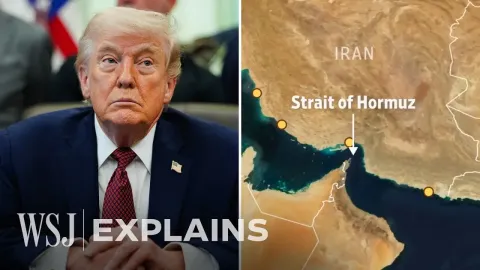
mistrust. In fact, we can't even say the issue of trust in relations between Iran and the United States. The problem with the American side is that it has always expected to impose its maximum demands during negotiations and throughout the entire diplomatic process, pushing the other side to accept them. Though the United States and Iran have suspended hostilities since an April 8 ceasefire, the two countries remain at odds over a range of issues, including Iran's nuclear ambitions and control over the Strait of Hormuz. The two sides have yet to agree to a second meeting following a brief summit of senior officials in Islamabad last month. And for more on this, our correspondent Susan Thrani has sent us this report from New York. Listen in.
President Trump says that the United States is weighing its options regarding its next move on Iran, but prefers a deal over escalation. asked about potential strikes. He said that options range from negotiations to going in heavy, though he stressed that he rather avoid that on a human basis. Trump described Iran's leadership as being divided, claiming that even hardliners now want to make a deal with him. He also insisted that the US military is fully prepared, locked and loaded with more resources than at the start of the conflict. Meanwhile, the Trump administration on paper is now saying that the war is effectively terminated, but for the sake of Congress, that is
because it has reached a 60-day mark under the War Powers Resolution, which requires either authorization or a shift in how the operation is classified, even as negotiations with Iran seem to continue. Susan Takmani reporting from New York for WE on World One.

Read the full English subtitles of this video, line by line.